
“Who was the most fateful person in the history of Western mankind?” Nietzsche answers.

December 26th, 2018

Share

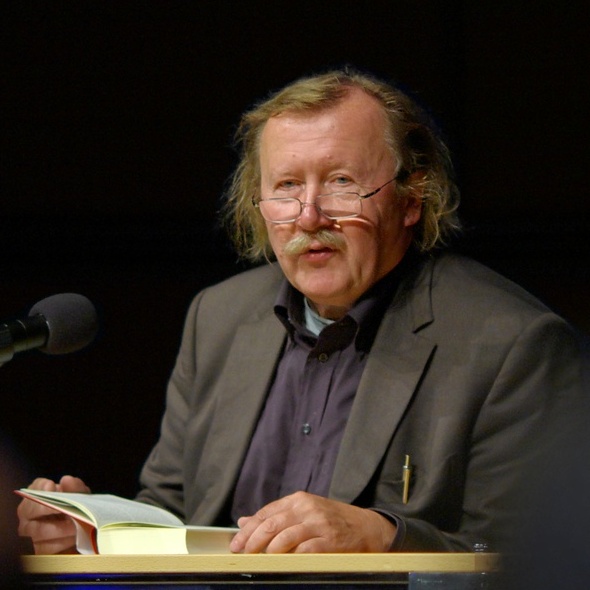
Sloterdijk wrote “Nietzsche Apostle.”

The Berlin national daily Die Welt has published Robert Pogue Harrison‘s recent Entitled Opinions radio/podcast interview with philosopher Peter Sloterdijk in time for the holidays here. You can listen to the interview (recorded in English) over at the Los Angeles Review of Books here

It’s kind of a Christmastime message, in a backhanded sort of way.

It begins:

Robert Harrison: I have just finished reading your splendid little book called Nietzsche Apostle, which was published in English in 2013 but first came out in Germany in the year 2000, on the hundredth anniversary of Nietzsche‘s death. What exactly you mean when you speak of Nietzsche as an apostle?

Peter Sloterdijk: he answer is quite simple. Nietzsche had very high ambitions, and he asked an elementary question, “Who was the most fateful person in the history of Western mankind?” And the answer he gave by himself, to himself, was that this person was obviously Saint Paul, whom he took for the real founder of Christianity – only apostle Saint Paul, who invented the apostolic role as such.

Saint Paul was the most fateful person in history, according to Nietzsche. If it were possible to undo the effects that Saint Paul had created, it would change the course of history. According to Nietzsche, Saint Paul brought genius into resentment. He elevated resentment to a level from which it could became a gospel.

Harrison: Do you believe that the figure of Jesus is secondary, in Nietzsche’s mind, to Paul?

He thought rather highly of himself.

Sloterdijk: In a certain way, yes. It’s absolutely not clear if Jesus had a universalist message. Jesus seems to be an elitist. He talks to those who can understand. Eventually there’s an encounter between the Gospels and the evangelical messages and Greek philosophy. The meeting began in Paul’s writings and were taken up in the fourth Gospel, which was written later. This meeting between Hellenism and the unruly Jewish method made possible what we call Christianity.

Harrison: Of course, the word gospel means “good news” or “glad tidings.” You make a point of Nietzsche’s claim that he wrote the fifth gospel in his book Zarathustra. Can you speak a little bit about this fifth gospel and the paradoxes at the heart of it? You claim Nietzsche made a great effort to convince himself of the “good news” and to continue believing that he was actually a bearer of good news. He was tormented by the fact that before you get to any good news, there’s terrible news – dreadful, awful news that he has to bring to humankind.

Sloterdijk: First of all, the category of “news” is problematic because news, in modern terms, is actuality, whereas for those who used it as a term ἄγγελμα in former times simply meant “message,” or in German, botschaft. The ἄγγελος is just a messenger. That is important. The connection with time is not yet so clear.

Read the rest here – but if you don’t know German, you’ll have to have a go with Google Translate. Or wait for English publication.
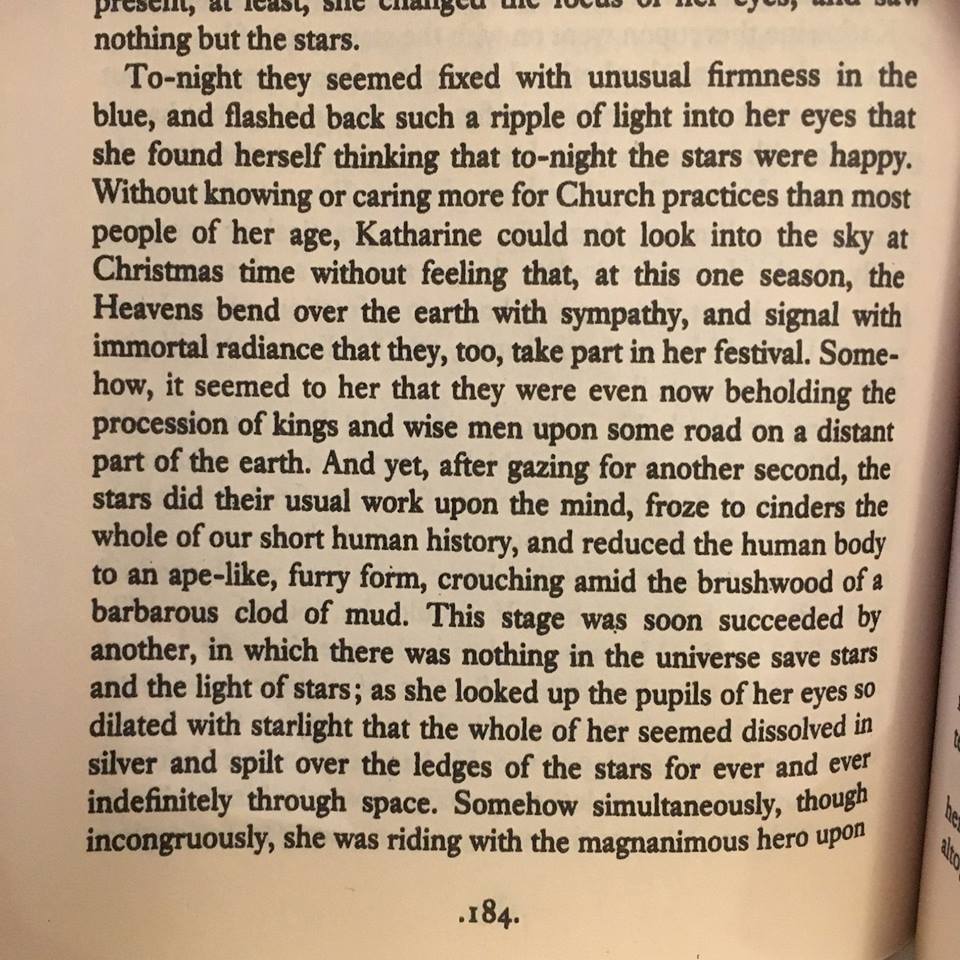
Holiday greetings from the world, and one from Virginia Woolf: “at this one season, the Heavens bend over the earth with sympathy…”

December 24th, 2018
Share

…at this one season, the Heavens bend over the earth with sympathy, and signal with immortal radiance that they, too, take part in her festival.”

A quick holiday message from your exhausted correspondent at the Book Haven – and a better one from Virginia Woolf, from her novella Night and Day The passage comes to us courtesy Book Post, Ann Kjellberg‘s subscription-based book review, offering a “bite-sized newsletter-based book review delivery service, sending paying subscribers high-quality book reviews, by distinguished and engaging writers, direct to their inboxes.

We’ve enjoyed greetings from around the world in our own inbox, and thought we’d share a few from senders who have appeared in the Book Haven pages: Swedish author and translator Bengt Jangfeldt, and his wife, the Russian actress Jelena Jangfeldt, writing from Stockholm; Swedish poet Håkan Sandell sends his julekort from Oslo; cat-loving Russian scholar Valentina Polukhina sends a few felines from her London home; and an Upernavik, Greenland, winter image arrived from Polish photographer, and regular Book Haven contributor, Zygmunt Malinowski in New York City. We’ll be hearing more from him in a few days.

Meanwhile, have a wonderful holiday with family and friends with plenty of good cheer!


Adam Zagajewski on Krzysztof Michalski: “only the impossible can be marvelous”

December 22nd, 2018
Share

Much missed.

This poem is making an appearance on Twitter, thanks to Tom D’Evelyn. I hadn’t seen it, nor the new Adam Zagajewski collection Asymmetry, translated by Clare Cavanagh. Another postponed pleasure. The poem recalls philosopher Krzysztof Michalski, founder of Vienna’s Institut für die Wissenschaften vom Menschen, where I was a fellow and met him in 2008, and where he died five years ago of cancer.

Tom writes, Twitter fashion: “Adam Zagajewski Asymmetry Trans Clare Cavanagh. ⁦⁩ ‘Krzys Michalski Died’— yes he did. Google (I did). The poem does not lie: he was like that. Slightly immortal; I ordered his book on Nietzsche. The poem makes me envious ⁦⁩ in a good way. Thanks AZ!”

A Christmas lost-and-found story – courtesy a book-loving Victorian girl named Minnie Percy

December 21st, 2018
Share

The story of a gift that’s lost and then found seems to be a Christmas theme, and so we present this little Victorian Christmas story, from Bay Area high school English teacher Chris Bunje Lowenstein. Careful Book Haven readers will remember that Chris is a Dante-lover (we wrote about her Dante pack of cards at an antiquarian book fair a few years back here).

A Dante-lover, too.

From Chris:

At this year’s seasonal Great Dickens Christmas Fair in San Francisco, I came across the quintessential “olde book shoppe,” which specializes in – of course – the works of Charles Dickens. The wooden bookcases in the shop bowed under the weight of a few thousand other beautiful books with decorative bindings, most of which were published from about 1880 to 1914. It takes the owner three days to create this replica of a 19th-century bookshop.

I spent a full hour in the shop, and, having decided to take some bits of history home with me, I purchased seven 19th-century books with beautiful decorative bindings. As I made my purchase, my eye happened to fall on a small group of papers, propped on a shelf and bound by thread and a fraying blue ribbon. The paper that formed the “cover” of this little booklet had a highly decorated, hand-colored drawing of Shakespeare. Underneath the drawing, in Gothic lettering, was the name “Minnie Percy”. I have no idea who Minnie Percy was or why she’d created this booklet, but I fell in love with the colorful cover and the fact that every word inside was handwritten. Here in this manuscript was a bit of Victorian history kept alive. I imagined the pleasant hours I would spend researching the piece, admiring it, and sharing it with my high school students and book collector friends. Impulsively, I purchased the little manuscript, but it didn’t fit in the bag with the seven other books I’d bought. To protect it, the owner of the shop placed the manuscript in between two pieces of cardboard, and, parcels and purse in hand, I wandered around the fair for two more hours before returning home only to notice …

I had lost it! Somehow, the manuscript had slid out of its protective cardboard and fallen to the ground unnoticed. I was ashamed at my own carelessness. I had allowed myself to be so caught up in the re-creation of history that is the Dickens Fair that I dropped and lost an actual piece of history, a piece of history whose caretaker I had implicitly agreed to become once I purchased it.

That evening, I emailed the fair’s producers, describing the manuscript and the vendor from whom I purchased it and asking them to please contact me on the chance that someone found it and turned it in. I heard nothing. The next day, on a break after one of my English classes, I checked my email. Nothing. And again after school. Nothing. After several days, I began to despair. Perhaps the manuscript had been swept up like the other trash at the end of the day and discarded. Or – best case scenario – perhaps someone saw the manuscript on the ground, recognized its beauty, and took it home. While I would have preferred to keep the manuscript for myself, I was at least consoled by this version of events, because in this version the manuscript would not be lost to history; it would live on in the care of someone else. By the end of the week, I had abandoned all hope. I would never know what became of that beautiful, one-of-a-kind, little gem.

Late Friday, the day after Thanksgiving, my phone rang. The caller identified himself as the owner of the bookshop at the Great Dickens Christmas Fair. “Someone turned in to the ticket office the manuscript you bought from me last weekend. The office had received the email with your contact information, so they brought the manuscript back to me and asked me to get in touch with you.”

I was so overjoyed that I swore I could hear Ebenezer Scrooge suggesting that I be boiled in my own pudding and buried with a stake of holly through my heart. A few hours later, I gave my name to the man working the will-call ticket booth, explaining why I was there. “Ah, madam” he said in his best Dickensian British accent, “we’ve been waiting for you. I have a parcel with your name on it. Just a moment.”

I thanked him and clutched the manuscript tightly, silently giving thanks to the kind soul – unknown to me – who also recognized that this manuscript was not a piece of trash but a treasure and who rescued it and, realizing that it belonged to someone else, turned it in. More than just a manuscript was returned to me on Saturday; my faith in humanity was also restored. God bless us, every one.

When I got home and finally had the chance to examine the manuscript booklet more closely, I saw that Minnie Percy had created a commonplace book she had titled “Gems from Shakespeare”. Inside the book were famous quotes from many of Shakespeare’s plays. The titles of the plays were written in large Gothic letters, and the bright blue ribbon that bound the book was also used for a bookmark. Written in Minnie Percy’s beautiful Spencerian script on the page the ribbon marks is the following quote from As You Like It:

And this our life, exempt from public haunt,
Finds tongues in trees, books in running brooks,
Sermons in stones, and good in everything.
I would not change it.

René Girard: “Today envy is the emotion which plays the greatest role in our society.”

December 18th, 2018
Share

Robert Harrison with René Girard outside the Stanford Faculty Club (Photo: Ewa Domańska)

Here’s some good news for the holidays! My Evolution of Desire: A Life of René Girard has been named one of the San Francisco Chronicle‘s top books of 2018! You can read about it here. We can’t think of a better Christmas present. But there’s more good news.

We wrote about Robert Pogue Harrison’s New York Review of Books essay, “Prophet of Envy,” on French theorist René Girard. We’ve also written about his Entitled Opinions radio show and podcasts. The year-end double issue of the U.K.’s  Standpoint has published a transcript of one of his 2005 Entitled Opinions interviews with his Stanford colleague – and with a line on the cover, too! (See right.) Excerpt below:

Robert Pogue Harrison: The founding adage of western philosophy is “know thyself.” That’s not an easy proposition. To know yourself means, above all, to know your desire. Desires lurk at the heart of our behavior, determine our motivations, organise our social relations, and inform our politics, religions, ideologies, and conflicts. Yet nothing is more mysterious, elusive, or perverse than human desire.

Our government invests billions of dollars in scientific research every year so we might better understand the world of nature, so that we might continue our pursuit of knowledge, yet commits only a tiny fraction of that to advancing the cause of self-knowledge. Most of our major problems today are as old as the world itself. The problem of reciprocal violence, for example. You would think we would want to understand its mechanisms, its psychology, and its tendencies to spiral out of control. Instead, we keep on perpetuating its cycles much the way our ancestors have done for centuries, and even millennia. Nor are we any closer to knowing the deeper layers of our conflicting and conflict-generating desires than they were.

René, your work has an enormous reach. It branches out into various areas and disciplines — literary criticism, anthropology, religious studies, and so forth. Today, I’d like to focus on what I take to be the foundational concept of all your thinking, namely mimetic desire. Can you tell our listeners exactly what you mean by that term?

René Girard: Mimetic desire is when our choice is not determined by the object itself, as we normally believe, but by another person. We imitate the other person, and this is what “mimetic” means. For example: why have all the girls been baring their navels for the last five years? Obviously, they didn’t all decide by themselves that it would be nice to show one’s navel — or that maybe that one’s navel is too warm, and one must do something about it.

One of San Francisco Chronicle’s top books for 2018

We’ll see the mimetic nature of that desire the day that fashion collapses. Suddenly, it will be a very old-fashioned to show one’s navel and no one will show it any more. And it will all happen because of other people — just as now, it is because of other people that they show it.

RPH: But how far do you want to go in saying that desire — by its very nature, and in human beings — is fundamentally mimetic?

RG: Maybe one can start from this question: what is the difference between need, appetite, and desire? Need is an appetite all animals have. We know very well that if we are alone in the Sahara Desert and we are thirsty, we don’t need a model to want to drink. It’s a need that we have to satisfy. But most of our desires in a civilised society are not like that.

Think of vanity, or snobbery. What is snobbery? In snobbery, you desire something not because you really had an appetite for it, but because you think you look smarter, you look more fashionable, if you imitate the man who desires that object, or who also pretends to desire it.

 And later in the interview…

RPH:  I asked in my opening remarks about why can’t we have an institution devoted strictly to the study of vengeance, for example, and work out its logic — reciprocal violence, these kinds of things. We are far from overcoming the behaviour that has characterised human history throughout the centuries.

But let’s move on to another emotion, which is closely linked, obviously, to hatred, vengeance, and jealousy, namely envy. I think envy is a highly underestimated emotion in the human relations. How do you see the role of envy?

RG:
 I see it the same way. Today envy is the emotion which plays the greatest role in our society, where everything is directed towards money. Therefore you envy the people who have more than you have. You cannot talk about your envy. I think the reason we talk so much about sex is that we don’t dare talk about envy. The real repression is the repression of envy.

And of course, envy is mimetic. You cannot help imitating your model. If you want money very badly, you’re going to enter the same business as the man who is your model. More likely than not, you will be destroyed by strength. So when people talk about masochism and so forth, they are still talking about mimetic desire. They are talking about how we move always to the greatest strength in the direction of the desire we envy most. We do so because that power is greater than ours — and it’s probably going to defeat us again. So there will be what Freud calls repetition in psychological life, which is linked to the fact that we’re obsessed with what has defeated us the first time. Our victorious rival in lovemaking becomes a permanent model. So novelists like Dostoevsky and Cervantes will show you characters who literally asked their rival to choose for them the girl they should love.

Read the whole thing here

Postscript on 12/18: The actual, physical copies of Standpoint arrived in my Stanford p.o. box today. It’s beauuu-ti-ful! (See photo at left.) Moreover, “Love and Envy in Shakespeare: A Dialogue with René Girard on Mimesis and Desire” leads the “Civilisation” section of the magazine. Thanks to Daniel Johnson and the London staff of Standpoint magazine. What fine work you do! And what a splendid Christmas present – not just for me, but for all of us!

Maximianus dropped down the memory hole – but now he’s back in time for the holidays.

December 16th, 2018
Share

Bravo, Mike Juster!

A few days ago, we wrote about a new translation of Theophrastus. Today we write about another ancient you may not have heard of: Maximianus, the last breath from Roman poetry. The complete Elegies of Maximianus is newly translated into English by A.M. Juster (we’ve written about him here). John Talbot’s review appears in The Weekly Standard – one of the few print venues left for those writing about books (and who wish to be paid decently for it), and it’s now about to go belly-up.

An excerpt:

The very last great moment in all of ancient literature comes as a surprise twist—a single line of Latin poetry that transforms a bawdy comic scene into a strange, tragic vision of the end of the cosmos. There then follow just 54 more lines of verse, after which Roman poetry itself comes to an end. You’d think that this last remarkable flicker from the ashes of antiquity would be famous. But both the author, the 6th-century Roman poet known to us as Maximianus, and his Elegies—just 686 lines of verse traditionally divided into six interrelated poems—have dropped almost completely from memory. Who has even heard of him?

This needs to change, starting with the remarkable passage I mentioned. The scene: Our poet, Maximianus, on a diplomatic mission from Italy to Byzantium, finds himself alone with a bright young Greek thing. He falls for her, and she’s willing, but he is not the young stallion he once was. When she bewails his repeated failure to rise to the occasion, he naturally takes it personally. Whereupon she delivers a startling retort: Nescis / Non fleo privatum set generale chaos. That is (in my own translation): “You’ve missed the point. It’s not your particular condition I’m bewailing—it’s the progressive dissolution of the universe as a whole.” What for Maximianus is simply one humiliating instance of later-life detumescence is, for the rather more alert and intelligent girl, something else altogether: a moral and intellectual apprehension of universal entropy. From the failure of Maximianus’ virility she generalizes on a cosmic scale and goes on to envision, in a speech that reads like a bleak parody of Lucretius, the eventual extinction of “the human race, the herds, the birds, the beasts / and everything that breathes throughout the world,” all of which depend on the procreative impulse.

Her sudden realization surprises her as much as it does us. It’s the moment when youth comes “for the first time,” as one critic puts it, “face to face with…the blankness of annihilation.” Yet this stark vision arises from a low comic situation, and that’s a key to its power. I doubt that Maximianus is a greater writer than Swift or even Samuel Beckett, but the satire is Swiftian and the Greek girl’s laconic observation, compacting mundane human irritation with cosmic existential despair, could have been uttered by an Estragon or Vladimir.

Read the whole thing here.


<<< Previous Series of PostssepNext Series of Posts >>>