Did Charlotte Salomon kill her grandfather? Not so fast, says biographer Felstiner.

July 12th, 2018

Share


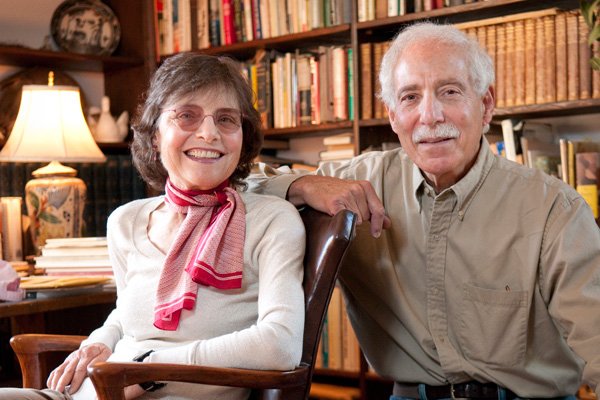
Mary Felstiner, with her late husband, translator and poet John Felstiner (Photo: L.A. Cicero)

Our post yesterday, “Psssst! She killed her grandfather”  recounted the controversy surrounding a recently revealed confession of artist Charlotte Salomon, one of the great innovative artists of the last century, who was killed at Auschwitz. The “confession” detailed how she murdered her grandfather. But did she? I reached out to Mary Felstiner, the first historian and biographer of Salomon, author of To Paint Her Life: Charlotte Salomon In the Nazi Era (HarperCollins, UC Press), which was awarded the American Historical Association Prize in 1995.

In fact, she is working on an essay on this very subject.

Mary’s judicious thoughts about the startling revelation:
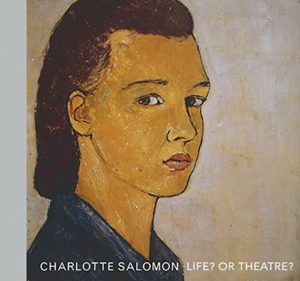
The book where the confession appears…

Charlotte Salomon has gained a considerable reputation in the last year: a major exhibition in Amsterdam; her artwork reproduced by Taschen, in German, French, and English; a stunning full-size art book published by Duckworth/Overlook, including the first translation and notes revealing new material; a capacious and profound work of art criticism by Griselda Pollock, published by Yale University Press. These have prompted riveting recent reviews in The New Yorker, London Review of Books, New York Review of Books, and Women’s Review of Books.

Charlotte Salomon’s 1941-42 artwork, Life? or Theater?, still astonishes onlookers, even in printed reproductions — her thousand-plus paintings create a new form, a visual operetta with staging and music and characters and political commentary. In addition, new interest in Charlotte Salomon has been stimulated by a multi-page painted “letter” she wrote in 1943. It was rediscovered in 2012, or rather, kept under wraps until 2012. Its content has proved shocking. Among deeper, more significant revelations, the artist – obliged to take care of her grandfather – rails against him, and then confesses to feeding him a morphine-based omelette as she writes the “letter.”

This rediscovered material has stretched new interpretations beyond previous historical, biographical, or art-critical accounts of the unprecedented artwork. It is now relabeled also as a story leading to murder by a victim of sexual abuse.
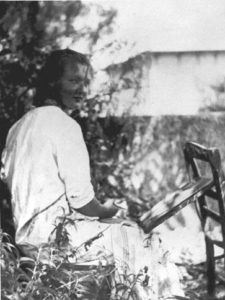
Was her confession truth or art?

A historian and biographer like myself, who decades ago located and interviewed many witnesses to Charlotte Salomon’s life, becomes concerned when interpretations rely principally on the paintings alone. For they are imaginative, theatrical, drawing on reality.

Neither inside or outside these paintings is there any direct evidence of either murder or abuse; and while such crimes are peculiarly hard to document in any specific case, the standard for non-evidentiary interpretation should be this: Are there significant numerous examples (say, of sexual threats and homicide within German Jewish families) from that time, place, and culture, and do these substantiate the interpretation? For instance, historians such as myself and Darcy Buerkle surrounded Charlotte Salomon’s artwork, which transmits a continuous theme of suicide, with serious archival research on suicide and secrecy in her time and place. Equivalent research would need to accompany the new material.

Personally, I tend to believe Charlotte Salomon wanted to put down her grandfather, but the act, if actual, was pressured by her historical context in 1943, and it’s not known if she succeeded in her fantasy or attempt. As for sexual abuse, she did paint one scene of attempted sexual abuse – by an unknown refugee on the road – so I am reluctant to accuse her grandfather without any direct word from the artist, either in an artwork that reveals other highly-charged family secrets, or in a “letter” revealing a more shameful and dangerous “confession.”

Psssst! She killed her grandfather.

July 11th, 2018
Share

Some months ago, I was squished in the backseat of a Lyfft with several other women, trekking back to Palo Alto after a San Francisco Middlebrook salon. One of the women wedged among us that night was Mary Felstiner, the preeminent biographer of the German Jewish artist Charlotte Salomon, who died at Auschwitz in 1943. And so she told us in the car the dark postscript to Salomon’s life story: the letter hidden for decades in which she describes her murder of her grandfather. I thought this was an insider’s speculation, and it was, but not now, and not at the time I heard the story on the long road back to Palo Alto. The confessional letter is included in a new edition of Salomon’s complete work, Leben? oder Theater? Ein Singespiel (Life? or Theatre? A Musical Play) published last fall. Like the Taschen book, it celebrates the centennial of Salomon’s birth last year.

As I wrote last month, her masterpiece, Life? or Theatre?, may be the first graphic novel. It includes 1,299 gouaches, 340 transparent overlays of text, and a narrative of 32K words. In the words of Toni Bentley writing in the New Yorker: “It is a work of mesmerizing power and astonishing ambition. Placed side by side, the ten-by-thirteen-inch paintings would reach the length of three New York City blocks … its uncategorizable nature is another reason why she has been left out of the canon of modern art, and seen only on the periphery of other genres into which she dipped her brush: German Expressionism, autobiography, memoir, operetta, play, and, now, murder mystery”:

Kristallnacht

In February, 1943, eight months before she was murdered in Auschwitz, the German painter Charlotte Salomon killed her grandfather. Salomon’s grandparents, like many Jews, had fled Germany in the mid-nineteen-thirties, with a stash of “morphine, opium, and Veronal” to use “when their money ran out.” But Salomon’s crime that morning was not a mercy killing to save the old man from the Nazis; this was entirely personal. It was Herr Doktor Lüdwig Grünwald, not “Herr Hitler,” who, Salomon wrote, “symbolized for me the people I had to resist.” And resist she did. She documented the event in real time, in a thirty-five-page letter, most of which has only recently come to light. “I knew where the poison was,” Salomon wrote. “It is acting as I write. Perhaps he is already dead now. Forgive me.” Salomon also describes how she drew a portrait of her grandfather as he expired in front of her, from the “Veronal omelette” she had cooked for him. The ink drawing of a distinguished, wizened man—his head slumped inside the collar of his bathrobe, his eyes closed, his mouth a thin slit nesting inside his voluminous beard—survives.

Painting in the garden at Villefranche-sur-Mer, ca. 1939

Salomon’s letter is addressed, repeatedly, to her “beloved” Alfred Wolfsohn, for whom she created her work. He never received the missive. Nineteen pages of Salomon’s “confession,” as she called it, were concealed by her family for more than sixty years, the murder excised. Fragments of the missing letter were first made public in the voice-over of a 2011 Dutch documentary by the filmmaker Frans Weisz. Salomon’s stepmother had shown him the pages, written in capital letters painted in watercolor, in 1975, and allowed him to copy the text, but, as requested, he had kept them secret for decades.

I hesitated to tell this story in my earlier post, which told of her survival in a family of suicides … significantly, the women around her maternal grandfather, his wife and two daughters (one of them Salomon’s mother, and the other her namesake aunt), killed themselves. She loathed him. How does one casually drop this sort of story in a blogpost? How does one integrate it into one’s thinking of her as an artist?

In a wicked twist of fate, Salomon’s French visa depended on her being her grandfather’s caretaker, so she returned to the Nice apartment where he was living and where, several months later, she poisoned him. “the theatre is dead!” she wrote in her confession as he was dying, a declaration whose resounding Nietzchean echo appears to answer the very question she posed in the title of Life? or Theatre? With this murder, Salomon defied her “inclination to despair and to dying” and chose life.

Read the New Yorker story here. You must.

Postscript on 7/13: Salomon’s preeminent biographer, Mary Felstiner, responds here.

NBCC does more than hand out book awards: a report from the forefront of book culture at a San Francisco fête

July 9th, 2018
Share

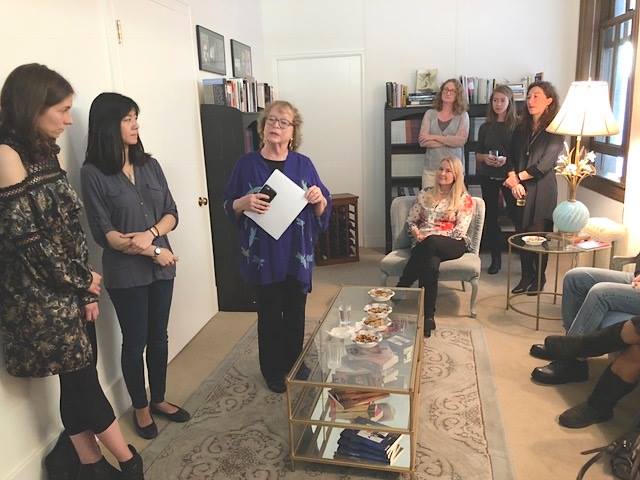
Jane Ciabattari introduces “Emerging Critics” Jennie Hann, in San Francisco from Baltimore and Bay Area’s Chelsea Leu.

Most people know the National Book Critics Circle from the prestigious annual awards for authors, handed out every year in New York City. For those of us who are members, it offers collegiality, professional resources, and of course opportunities to talk books, books, books.

Not that I would know. I have been the quietest member of the NBCC for the last several years, as I’ve labored away on Evolution of Desire: A Life of René Girard. But now that the book is out, I thought I’d poke my head out above the trenches.

Jane Ciabattari at Zyzzyva

So I joined friends earlier at a cocktail party on June 28 in the tony offices of Zyzzyva in the historic Mechanics’ Institute Building in downtown San Francisco. The occasion was simply a get-together, and a rare chance to chat with colleagues. It was my first time in the quarters of the San Francisco journal of arts and letters that, years ago, spirited away my San Francisco Chronicle book editor Oscar Villalon. (He had taken over the helm after David Kipen‘s departure.) He’s now Zyzzyva‘s managing editor and a former NBCC board member. I hadn’t seen him face-to-face since, except for one occasion at Litquake, a San Francisco literary institution, and another at Stanford’s Green Library for the Saroyan prizes.

Oscar was a energetic and reliable presence for books at the San Francisco Chronicle, and his legacy continues with John McMurtrie. I’ve never reviewed for John, but I hassle him regularly for publicity on Another Look book events at Stanford.

Another guiding presence at NBCC is smart, kindly, and resourceful Vice President Jane Ciabattari. Jane has been a friendly, constant, and reliable source of information and advice for free-lancers, this one included.

At the gathering Jane spoke about about the “Emerging Critics” program to foster and polish the next generation of those who devote themselves to the written word. That’s a lesser known aspect to the NBCC, apart from the celebrated prizes. See what else NBCC does on the calendar here.

I met so many people at the event I can’t remember them all (my mental attention is greatly diminished nowadays). But I returned to Palo Alto in the evening, thanks to a lift from Susanne Paria fascinating Iranian-American writer who dropped me off in front of my waiting car at Kepler’s, and then disappeared into the night.

Oscar Villalon discusses books with a colleague.

Philly Inquirer praises “Evolution of Desire”: “an extraordinarily vivid portrait of a man … an ingenious travelogue of his life and thought.”

July 7th, 2018
Share

René Girard in conversation in 2008. A screenshot from our Youtube book trailer.

Kisses and billets-doux from the City of Brotherly Love! More warm words for Evolution of Desire: A Life of René Girardthis time from the Philadelphia Inquirer. The reviewer is Frank Wilson, the esteemed paper’s retired book editor and notable blogger. He begins the piece, Evolution of Desire: René Girard, a man in full,” this way:

The Wikipedia entry for René Girard describes him as a historian, literary critic, and philosopher. It’s a good start. Girard, who died in 2015 at 91, ventured into many disciplines. And Cynthia Haven’s Evolution of Desire is an ingenious travelogue of his life and thought.

It’s a short review (under 800 words), so I won’t excerpt too much. You can read the whole thing, after all, right here. He concludes (spoiler alert!): 
Haven’s book, in fact, is something of a marvel. She knew Girard and got to know his friends and colleagues. She guides the reader along the trail of evidence, sketching deftly those she talked with and showing how she arrived at her conclusions. The result is an an extraordinarily vivid portrait of a man admired not just for his intelligence and erudition, but also for his character, wisdom, and humor. Let us give him the last word on what he referred to as “the so-called système-Girard”:

“What should be taken seriously … is the mimetic theory itself — its analytical power and versatility — rather than this or that particular conclusion or position, which critics tend to turn into some creed which I am supposedly trying to force down their throats. I am much less dogmatic than a certain reading of my work suggests.”

Order at Amazon here. Please.

Claude Lanzmann and the “fiction of the real.”

July 6th, 2018
Share

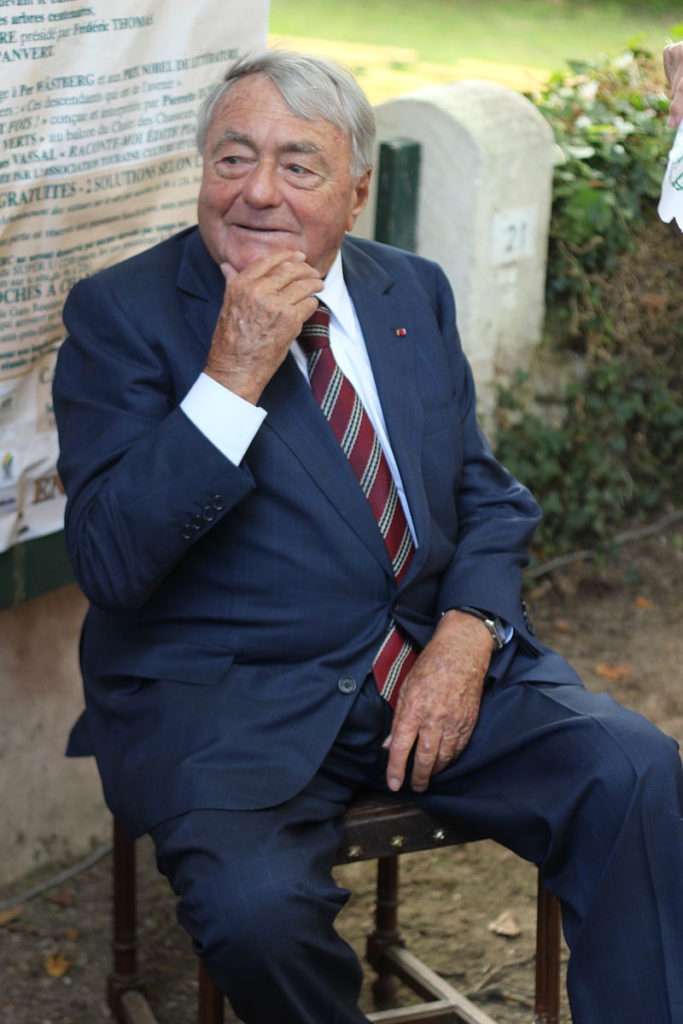
In 2014 (Photo: ActuaLitté)

Claude Lanzmann died yesterday. He was 92. Obituaries usually slide towards eulogy, so I was interested when the New York Public Library’s Paul Holdengräber drew my attention instead to a 2012 review of  Lanzmann’s The Patagonian Hare: A Memoir. Lanzmann, a French Jew, had joined the Résistance at 17. After the war, he had the distinction of being, for seven years, “the only man with whom Simone de Beauvoir lived a quasi-marital existence.” He was also a friend of Jean-Paul Sartre

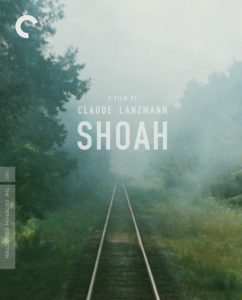
He was, of course, best known for his 1985 film Shoah. According to reviewer Adam Shatz: “released in 1985 after more than a decade of labour, is a powerful nine and a half hour investigation, composed almost entirely of oral testimony. Neither a conventional documentary nor a fictional re-creation but, as Lanzmann called it, ‘a fiction of the real’, Shoah revealed the way the Holocaust reverberated, as trauma, in the present.”

From the review:

He was asked by the Israeli government to make not a film about the Shoah, “but a film that is the Shoah.” Lanzmann accepted the assignment.

Until the 1960s, Israel had shown little interest in the Holocaust. The survivors, their stories, the Yiddish many of them spoke – these were all seen as shameful reminders of Jewish weakness, of the life in exile that the Jewish state had at last brought to an end. But with the Eichmann trial, and particularly after the 1967 war, Israel discovered that the Holocaust could be a powerful weapon in its ideological arsenal. Lanzmann, however, had more serious artistic ambitions for his film than the Foreign Ministry, which, impatient with his slowness, withdrew funding after a few years, before a single reel was shot. Lanzmann turned to the new prime minister, Menachem Begin, who put him in touch with a former member of Mossad, a ‘secret man devoid of emotions’. He promised that Israel would sponsor the film so long as it ran no longer than two hours and was completed in 18 months. Lanzmann agreed to the conditions, knowing he could never meet them. He ended up shooting 350 hours of film in half a dozen countries; the editing alone took more than five years. Despite his loyalty to Israel, his loyalty to Shoah came first, and he was prepared to do almost anything to make it his way.

Shoah is an austere, anti-spectacular film, without archival footage, newsreels or a single corpse. Lanzmann ‘showed nothing at all’, Godard complained. That was because there was nothing to show: the Nazis had gone to great lengths to conceal the extermination; for all their scrupulous record-keeping, they left behind no photographs of death in the gas chambers of Birkenau or the gas trucks in Chelmno. They hid the evidence of the extermination even as it was taking place, weaving pine tree branches into the barbed wire of the camps as camouflage, using geese to drown out cries, and burning the bodies of those who’d been asphyxiated. As Filip Müller – a member of the Sonderkommando at Auschwitz, the Special Unit of Jews who disposed of the bodies – explains in Shoah, Jews were forced to refer to corpses as Figuren (‘puppets’) or Schmattes (‘rags’), and beaten if they didn’t. Other filmmakers had compensated for the absence of images by showing newsreels of Nazi rallies, or photographs of corpses piled up in liberated concentration camps. Lanzmann chose instead to base his film on the testimony of survivors, perpetrators and bystanders. Their words – often heard over slow, spectral tracking shots of trains and forests in the killing fields of Poland – provided a gruelling account of the ‘life’ of the death camps: the cold, the brutality of the guards, the panic that gripped people as they were herded into the gas chambers.

In The Patagonian Hare, Lanzmann describes the making of Shoah as a kind of hallucinatory voyage, and himself as a pioneer in the desolate ruins of the camps, ‘spellbound, in thrall to the truth being revealed to me … I was the first person to return to the scene of the crime, to those who had never spoken.’ …

Jan Karski makes an appearance in the review:

Karski tried to tell the West.

Defending his depiction of Poland, Lanzmann says that his ‘most ardent supporter’ was Jan Karski, a representative of the Polish government in exile who made two visits to the Warsaw Ghetto in 1942, and reported his findings both to Anthony Eden and to Roosevelt. Until Lanzmann approached him for an interview in 1977, he had not spoken in public of his wartime mission. His appearance in Shoah and in The Karski Report, an addendum released last year, is indeed shattering:

Lanzmann deserves enormous credit for conducting the interview. Karski praised Shoah as ‘the greatest film that has ever been made about the tragedy of the Jews’, but sharply criticised Lanzmann’s failure to interview [Wladislaw] Bartoszewski, [a member of a clandestine network that rescued Polish Jews during the war]. Karski did not say this to defend his people – in his report, he deplored the Poles’ ‘inflexible, often pitiless’ attitude towards their Jewish compatriots – but because he believed Bartoszewski’s absence left the impression that ‘the Jews were abandoned by all of humanity,’ rather than by ‘those who held political and spiritual power’. Karski’s Holocaust was an unprecedented chapter in the history of political cruelty; Lanzmann’s Shoah was an eschatological event in the history of the Jews: incomparable, inexplicable, surrounded by what he called a ‘sacred flame’. ‘The destiny and the history of the Jewish people,’ he said in an interview with Cahiers du Cinéma, ‘cannot be compared to that of any other people.’ Even the hatred aimed at them was exceptional, he said, insisting that anti-semitism was of a different order from other forms of racism.


Pursuing our happiness: “You keep using that word. I do not think it means what you think it means.”

July 4th, 2018
Share

Happy Birthday, America! The Declaration of Independence upholds our right to “life, liberty, and the pursuit of happiness.” People have used that phrase to defend everything from the greedy acquisition of monstrous wealth to opioid addiction. We can only echo Inigo Montoya, played by Mandy Patinkin, in the youtube clip above.

What, precisely, does the phrase “the pursuit of happiness” mean? Hat tip to philosopher Ellen Trezevant of Bruges, who pointed us to Carli N. Conklin’s “The Origins of the Pursuit of Happiness” in the Washington University Jurisprudence Review:

They knew what they were talking about…

[F]ar from being a “glittering generality” or a direct substitution for property, the pursuit of happiness is a phrase that had a distinct meaning to those who included that phrase in two of the eighteenth-century’s most influential legal documents: William Blackstone’s Commentaries on the Laws of England (1765–1769) and the Declaration of Independence (1776). That distinct meaning included a belief in first principles by which the created world is governed, the idea that these first principles were discoverable by man, and the belief that to pursue a life lived in accordance with those principles was to pursue a life of virtue, with the end result of happiness, best defined in the Greek sense of eudaimonia or human flourishing. The pursuit of happiness then is a phrase full of substance from Blackstone (and before) to the Founders (and beyond). It was part of an English and Scottish Enlightenment understanding of epistemology and jurisprudence. It found its way into eighteenth-century English sermons and colonial era speeches and writings on political tyranny. It had meaning to those who wrote and spoke the phrase in eighteenth-century English and American legal contexts, and it had meaning to its listeners. …

[B]ut the most common contemporary understanding of the word “happy” aligns today with what the eighteenth-century philosophers would have called a “fleeting and temporal” happiness versus a “real and substantial” happiness. The first is a happiness rooted in disposition, circumstance, and temperament; it is a temporary feeling of psychological pleasure. The second is happiness as eudaimonia—well-being or human flourishing. It includes a sense of psychological pleasure or “feeling good” but does so in a “real” or “substantial” sense. It is “real” in that it is genuine and true. It is substantial in that it pertains to the substance or essence of what it means to be fully human.

Below, to celebrate the Fourth of July, perhaps the most moving ode to America written in decades, in Tony Kushner‘s Angels in America ... spoken during a eulogy, with Meryl Streep as the rabbi…


<<< Previous Series of PostssepNext Series of Posts >>>