Is Vladislav Khodasevich the most underappreciated Russian poet of the last century? Maybe.

February 15th, 2016

Share
khodasevich

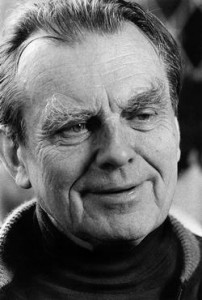
Intense guy. (Khodasevich, that is, but also true for Miłosz and Herbert).

Until this week, I knew the Russian poet Vladislav Khodasevich (1886-1939) only through the squabbles of two poets, Czesław Miłosz and Zbigniew Herbert. Some of the differences between the two Poles are documented here, but perhaps their most famous rift is associated with Herbert’s poem by the title “Khodasevich,” targeting Miłosz, not the Russian. I looked for some information on this conflict online, and found, to my surprise, an illuminating interview with Miłosz biographer in Kraków, Andrzej Franaszek. The interview, “I Will Oppress You with My Strange Love,” was conducted by Humble Moi, and I had forgotten I had done it years ago (it’s here).

A relevant excerpt:

HAVEN: Let’s discuss “Khodasevich,” from Herbert’s penultimate 1992 collection, six years before his death. It’s ostensibly about Russian émigré poet Vladislav Khodasevich (1886-1939), but actually attacks Miłosz, right down to his interest in Swedenborg and his devotion to Oscar Miłosz, his cosmopolitan kinsman and fellow-writer in Paris. It ends: “from behind the clouds his rhyming frog-croaks.” Can you explain a little Herbert’s apparent animosity, and how it scandalized Poland in the 1990s?

FRANASZEK: Well, what I can say is that personally for me—and surely for many other readers—it was a kind of shock. When I read “Khodasevich” for the first time, I couldn’t believe that it was Herbert’s poem. Not only because of all accusations which could be found in it, but mostly because of a huge dose of hostility and scorn, because of its language, tone, the poetics of a lampoon—it’s extremely different from Herbert’s normal poetical idiom. But what is really interesting, after writing “Khodasevich,” Herbert sent to Miłosz, his painfully mocked friend, a postcard with a leg of an elephant suspended upon a defenseless chicken and with a three-word note: “Don’t tread upon”…

HAVEN: Strange. I would have thought Miłosz was the one who had been underfoot. What on earth did he mean by that?

FRANASZEK: Well, what can I say? Maybe Herbert felt himself to be the weaker party in this relationship.
cigale

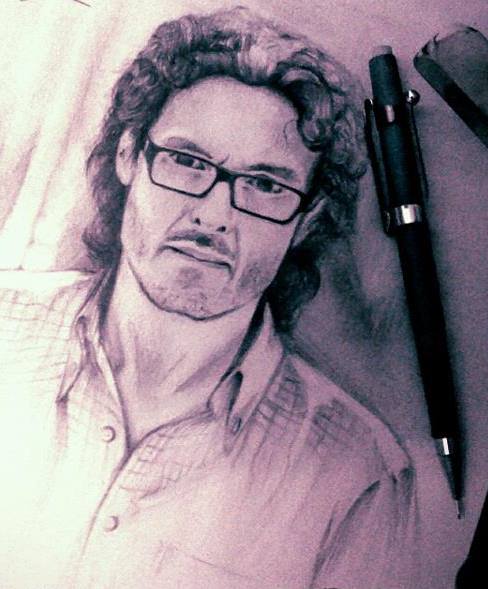
Alex Cigale, drawn by Dastan Abaskanov.

So what does that tell us about Khodasevich? Bupkis. But that’s probably how most people get introduced to this Russian poet, who emigrated to Berlin in the 1920s and is arguably the most underappreciated Russian poet of the last century – if they get introduced at all, that is. Upon his death, Vladimir Nabokov called him “the greatest Russian poet the 20th century has yet produced.”

More help is readily at hand with the recent issue of Kenyon Review, where a friend, Alexander Cigale, has published a new translation of his enigmatic poem, “The Ape.” (You can listen to Alex reading it, in English and Russian, here.) “The Ape” is the best known of Vladislav Khodasevich’s sequence of blank verse poems (1918-1919) in response to the horrors of World War I and the Russian Revolution. Read it here. (You can also read Peter Daniels’ translation of Khodasevich’s “Look for Me” in The Guardian here.) I find the poem enigmatic – but Alex was surprised at that characterization: “It always seemed, if anything, painfully earnest to me.” Perhaps both are true.

From Alex’s own preface to the sequence:
kr-winter

Current issue

While much remains to be said to attempt to explain what makes Khodasevich both stand out and not fit in with the main body of Russian poetry, it is his synthesis of the classic and the modern, the intense personalism of his lyrical ego, the directness of his voice and address often verging on simplicity, that marks his primary individuality as a poet. The naked vulnerability of such words raises the bar by exposing the relative perfection and imperfection of every word, achieving a kind of cameo-like high contrast that makes these poems nearly unique in the Russian canon.

Noam Chomsky thinks the U.S. is “one of the most fundamentalist countries in the world.” René Girard replies.

February 12th, 2016
Share
Chomsky

Curmudgeonly? (Photo: Duncan Rawlinson/Creative Commons)

The Académie Française memorial service for René Girard in Saint-Germain-des-Prés will take place this weekend. The Book Haven has written much about the French theorist, who died on November 4 (see here). I will not be in Paris, alas, except in spirit. So René was much in my mind when I read the latest headline from Noam Chomsky. According to The Wirethe controversial public intellectual thinks America is “one of the most fundamentalist countries in the world.” Really? He’s including Pakistan, Libya, Saudi Arabia in the competition? I wondered.

In fairness, his comment is much is much more nuanced than that … well, not much more. According to the article: “There are not too many countries in the world where two-thirds of the population awaits The Second Coming, Chomsky said, adding that half of them think it is going to be in their lifetimes. ‘And maybe a third of the population believes the world was created 10,000 years ago, exactly the way it is now. Things like that are pretty weird, but that is true in the United States and has been for a long time.’” Guess I haven’t been hanging out in the right circles. How quick we are, however, to distance ourselves from those people. That should be a tip-off.

I returned to what René had to say on the subject in a short (about 100 page), very readable Q&A book, When These Things Begin: Conversations with Michel Treguertranslated by Trevor Cribben-Merrill and published by Michigan State University Press in 2014. An excerpt:

MT: What do you think of the “creationists” who take the Bible literally?

RG: They’re wrong, of course, but I don’t want to speak ill of them because today they are the scapegoats of American culture. The media distorts everything they say and treats them like the lowest of the low.

MT: But if they’re wrong, why not? You speak of scapegoats, but, as far as I know, nobody’s putting the creationists to death, are they?

girard4

I’m with René. (Photo: L.A. Cicero)

RG: They’re ostracized from society. It’s said that Americans can’t resist peer pressure, and it’s generally true. Just look at academia, that vast herd of sheep-like individualists: they think they’re persecuted, but they’re not. The creationists are. They’re resisting peer pressure. I take my hat off to them.

MT: But what if they’re absolutely wrong? For someone who places such emphasis on the truth, whatever the cost, I suddenly find you very indulgent.

RG: And what do you do with freedom of religion? In America, as elsewhere, fundamentalism results from the breakdown of an age-old compromise between religion and anti-religious humanism. And it’s anti-religious humanism that is responsible for the breakdown. It espouses doctrines that start with abortion, that continue with genetic manipulation, and that tomorrow will undoubtedly lead to hyperefficient forms of euthanasia. In at most a few decades we’ll have transformed man into a repugnant little pleasure-machine, forever liberated from pain and even from death, which is to say from everything that, paradoxically, encourages us to pursue any sort of noble human aim, and not only religious transcendence.

treguerMT: So there’s nothing worse than trying to avert real dangers by means of false beliefs?

RG: Mankind has never done anything else.

MT: That’s no reason to continue.

RG: The fundamentalists often defend ideas that I deplore, but a remnant of spiritual health makes them foresee the horror of the warm and fuzzy concentration camp that our benevolent bureaucracies are preparing for us, and their revolt looks more respectable to me than our somnolence. In an era where everyone boasts of being a marginal dissident even as they display a stupefying mimetic docility, the fundamentalists are authentic dissidents. I recently refused to participate in a supposedly scientific study that treats them like guinea pigs, without the researchers ever asking themselves about the role of their own academic ideology in a phenomenon that they think they’re studying objectively, with complete and utter detachment.

What can I say? He will be missed. No one like him. And I wish I were in Paris this weekend.

The “future of the past” – and a small victory in Hannibal, Missouri

February 9th, 2016
Share

fisherfishkinTwo months ago, I wrote about Shelley Fisher Fishkin‘s newest book, Writing America, and her presentation at the Stanford University Libraries. Read about it here. She gave a great talk, and she revisits many of the same themes in “The Future of the Past,” in this week’s Chronicle of Higher Education. The Twain scholar makes a passionate argument for literature as a doorway to the past, and the necessity of understanding the past in the first place (not to be assumed as a “given,” nowadays).

An excerpt:

In hindsight, history often looks inevitable. But it rarely is. It is shaped by the choices individuals make as events are unfolding, by their distinctive perspectives and understandings of their world. Literature can help us enter into those moments when choices must be made and can help us grasp the consequences of those choices. Coming to terms with a past shaped by human actors, in all their messy complexity, can influence how our own words and actions shape the future.

And she returns to the subject of her talk in December, centering on Hannibal, Missouri, and her beloved Mark Twain:

huck_finn“An assignment I was given in high school prompted me to re-examine the past myself, and it changed my life: Write a paper on how  used irony to attack racism in Huckleberry Finn. That paper ignited a lifelong engagement with issues of race and racism in America’s past as well as with the work of Mark Twain.

“It led me, in Lighting Out for the Territory, to excoriate the powers-that-be in Hannibal, Mo., a town that runs on Twain tourism, for its failure to acknowledge the role of slavery and racism in its past and in Twain’s work, and for its erasure of African-American life in Hannibal during the century and a half after emancipation. Hannibal may have been keen about historic preservation, but the history it chose to preserve involved little white boys playing marbles, not little black boys sold from their mothers.

huckjim“Faye Dant, a fifth-generation Hannibal resident whose ancestors had been enslaved there, said that book, and my earlier book Was Huck Black? Mark Twain and African-American Voices, had inspired her to work to recover and preserve for future generations the history that the town had ignored. Her efforts culminated, in September 2013, with the grand opening of Jim’s Journey: The Huck Finn Freedom Center. The black-history museum is now the first building visitors encounter when they turn off the highway en route to the Mark Twain Historic District.”


Read the whole thing here.

Wallace Stegner, Czesław Miłosz, and what they had to say to each other

February 7th, 2016
Share
stegner4

Stegner got used to the barbs.

I discovered this offbeat and little-known treasure on Youtube – a rare treat for fans of American Pulitzer prizewinning author Wallace Stegner and Nobel poet Czesław Miłosz. The interview was filmed sometime in the 1980s, and has less than 1,450 views to date.

It is perhaps one of the most uncomfortable “friendly” interviews I’ve ever watched, with only occasional flashes of smiles and laughter. The unedited raw footage comes to us via Stephen Fisher Productions – with the cameramen periodically stopping the filming, interjecting questions, and restarting with calls of “Rolling!” Stegner gamely keeps trying to draw Miłosz out, as they stand on a breezy hilltop in Berkeley’s Tilden Park. They both look like they’d rather be indoors.

A happenstance Californian.

A reluctant Californian

The topic at hand: the effect of landscape on a writer’s spirit. “I lived through rebellion against California landscape,” Miłosz admits in his heavy Polish accent. It’s a rebellion, he said, that lasted twenty years. (I write about Miłosz as a California poet here.) Stegner agrees that California “offends a lot of people by being so dry and barren and prickly. Everything in it has barbs.” Naturally, the subject of poet Robinson Jeffers comes up on a couple occasions.

Miłosz said he missed the “cosiness” of the Lithuanian valley where he grew up – when he wasn’t traipsing about the vast expanses of Russia with his family during pre-revolutionary years (his father was an engineer of the empire). Miłosz does say that he was intrigued by the number of species he found in California  – species of pines and birds and everything else. Plenty of jays in Europe, he said, but not so many as here. “I was intrigued by the essence of being a jay,” he said. Well we know what happened with that, with his poem “Magpiety.”

Watch it for yourself:

Leo Tolstoy: The Movie

February 5th, 2016
Share

tolstoyWe are still recovering from the Werner Herzog‘s visit to Stanford, and will have more to say on this later. My mode of recovery will be to go to the home of friends and watch End of the Tour again, a film that was greatly overlooked in this year’s round of film awards, despite Jason Segels top-notch performance.

What can I offer my readers? How about this short film clip of Leo Tolstoy, taken during his last days, before his death in 1910? At the age of 82, he made the unusual decision to leave his wife. Not content with traveling 26 hours to his sister Marya’s house in Sharmardino, where he had planned to retire to a small hut for his remaining days, he pushed on to the Caucasus, where he died at a train station at Astapovo.

Elif Batuman wrote about this curious demise over at Harper’s here. The topic came about during her Stanford years:

Once, when I was a graduate student, a paper of mine was accepted at the conference. At the time, my department awarded two kinds of travel grants: $1,000 for presenting a paper at an international conference or $2,500 for international field research. My needs clearly fell into the first category, but with an extra $1,500 on the line, I decided to have a go at writing a field-research proposal. Surely there was some mystery that could only be solved at Tolstoy’s house?

I rode my bicycle through blinding summer sunshine to the library and spent several hours shut up in my refrigerated, fluorescent-lit carrel, with a copy of Henri Troyat’s 700-page biography Tolstoy. I read with particular interest the final chapters, “Last Will and Testament” and “Flight.” Then I checked out a treatise on poisonous plants and skimmed through it outside at the coffee stand. Finally, I went back inside and plugged in my laptop.

“Tolstoy died in November 1910 at the provincial train station of Astapovo, under what can only be described as strange circumstances,” I typed. “But the strangeness of these circumstances was immediately assimilated into the broader context of Tolstoy’s life and work. After all, had anyone really expected the author of The Death of Ivan Ilyich to drop dead quietly, in some dark corner? And so a death was taken for granted that in fact merited closer examination.”

Read the rest here.

Film clip from the 1969 BBC series Civilisation: A Personal View by Kenneth Clark,

Werner Herzog tonight!

February 2nd, 2016
Share

baker-poster-EMAIL


<<< Previous Series of PostssepNext Series of Posts >>>