Just in time for Christmas: Clive Wilmer’s “Sidney Carol”

December 24th, 2013

Share
Sir_Philip_Sidney

Quite the man.

Readers of the Book Haven know of my special fondness for Cambridge, after my single night as a Girtonian a couple years ago (I wrote about it here). I have an additional reason for my warm feelings for the place: the poet Clive Wilmer and I have never met face-to-face, but we’ve corresponded, off and on, for years.  The poet is a fellow at Cambridge’s Sidney Sussex College, which was founded on St. Valentine’s Day in 1596 by legacy of Lady Frances Sidney, Countess of Sussex, for her nephew, the Elizabethan courtier and poet Sir Philip Sidney. What better place for a poet than a college named for one?  And where better to turn for a couple Christmas poems than Clive Wilmer? (Second installment tomorrow.)

Clive considers this poem is more an Advent Carol than a Christmas one – so I had to hurry to catch the last day of Advent before the first day of Christmas.

The poem was inspired by an Advent Carol Service in King’s College Chapel, Cambridge. “The first item in that service – not at all the same as the famous Christmas Eve one that you see on TV – is a setting by Palestrina of a prose text which begins ‘I look from afar’, ‘Prospiciens a longe‘ in the original. I thought of the whole poem as trying to evoke that feeling of absence, dark and cold, but also of anticipation before some great, as-yet-unknown event.”

I’m not sure darkness and cold is part of a California Christmas – the sun is shining brightly outside my window as I patter away on my keyboard, and my black cat is lolling in the grass, reveling in the mild weather. However, a few weeks ago I was throwing bedsheets over my olive trees and orchids to keep them from freezing in the nasty cold snap and huddling over the oil heater.  See? Even Californians suffer.

Enjoy the poem and the day.

Sidney Carol

Each year it comes round again:
.       The aching chill,
.       The ashen sky,
The sunset bleeding through the fen,
The freezing of our warm good will,
.   The sense that things must die.
Each year it comes round again.

As every year, the shepherds squat
.       On bleaching grass
.       Around the fold.
Not asking if their life is what
Was always meant to come to pass
.   Or why good things grow cold,
As every year, the shepherds squat.

Sure as the stars at evening rise,
.       There are three kings
.       Who year by year
Come seeking what will make them wise:
The new life which the winter brings,
.   And which will now appear
Sure as the stars at evening rise.

In this bleak world what hope of joy?
.       The ordeal of birth
.       Has flecked with blood
A slight girl and her tiny boy.
They hear the song of peace on earth
.   And trust in human good:
In this bleak world a hope of joy.

The year runs on and there is change:
.       Not peace but war,
.       My path is lost.
And yet the power of time is strange.
The winter child comes as before,
.   Like snowdrops in the frost.
The year runs on and there is change.

Once more, a choir of angels sings,
.       As moonlight glows
.       Within the ice.
The shepherds join them, and the kings.
Let us, too, join them, while it snows,
.   To greet the new-born Christ.
Once more, a choir of angels sings.

sidneysussex1

Cloister Court, Sussex Sidney College – a poet’s college for a poet. (Photo: David Purchase)

Christmas in NYC, and avant-garde director Robert Wilson’s latest

December 23rd, 2013
Share
foto_©Zygmunt_Malinowski

One of NYC’s many treasures, the Park Avenue Armory. (Photo: Zygmunt Malinowski) 

Here’s the Christmas I’m missing in New York City (I’m also missing one in Amsterdam, St. Petersburg, Rome, and Madrid…)  I just received a holiday message from photographer Zygmunt Malinowski, with this photo.

“Living in New York City, I still surprise myself that there is a place or a street that I haven’t seen before. I passed Park Avenue Armory so many times but hadn’t been inside,” he wrote. “It’s known for its Gilded Age beauty with wonderful architecture and fine decorative elements, as you can see on my photo.”  It was also the site of Robert Wilson’s latest production, the opera The Life and Death of Marina Abramović, which he attended last weekend (I’ve written about the avant-garde director here).

wilson_onstage

Robert Wilson at Stanford, 2008 (Photo: L.A. Cicero)

“Marina pioneered performance as visual art form (she had a retrospective at MOMA in 2010), and the actor Willem Dafoe had one of the leading roles. The opera sold out quickly but I caught the last performance,” he wrote.

The New York Times had mixed feelings about the the critically acclaimed re-imagination of the Belgrade-born Abramović’s biography, saying that “much of what takes place in Life and Death defies easy exegesis, or even simple comprehension”:

The rigorous, elemental aesthetic that has defined Ms. Abramovic’s own works here has been amplified by the manifold contributions of her collaborators, resulting in a show whose lavish effects tend to keep the woman at its center at a distance, atop a glossy pedestal instead of uncomfortably in our faces, as she is in her solo performances. The Life and Death of Marina Abramovic feels more like the gilding of an icon rather than the illumination of an artist’s experience.

Zygmunt, however, was sold: “Robert Wilson, the innovative theatre director, staged a Solidarity anniversary in Gdansk shipyard three years ago that I attended, but it was disappointing. However, he redeemed himself in the current production. It was awesome.”

More about the production below.

Badass birds for Christmas … and not for your dinner table.

December 22nd, 2013
Share
pigeon-painting-betterversion

Piero Francesca’s … the new, improved version…

During my online rummaging before the coffee and the Nexium kick in, I ran across this intriguing article, in time for Christmas: “The Surprisingly Badass Birds of the Bible, written by Debbie Blue, author of Consider the Birds.

picassoRemember that it was a dove that brought back the branch to Noah?  And a dove descended at the baptism?  And Pablo Picasso‘s dove (left), often used for a generic Christmas card image? Cancel all those mental pictures of fluttery white birds, symbols of peace and love and every good thing.  Now Ms. Blue tells us we have it all wrong. The bird referred to is most likely a “rock dove,” commonplace in Palestine and indeed everywhere else – not white, but gray, with an iridescent green and violet neck. Sounds lovely, doesn’t it?  And a bit familiar …

I’ve always liked pigeons, with their gentle coo, their tendency to flock together for company.  So in honor of this new revelation, the Book Haven has commissioned our favorite artist … alright, alright, it’s my daughter… to recreate Piero della Francesca‘s famous mid-fifteenth century painting, “The Baptism of Christ.”  Of course, a pigeon hovering over one’s head brings more nervous associations to mind … we can’t help that.  The women at the left of the painting look understandably anxious.

vultureBut what are we to do with T.S. Eliot’s “Little Gidding”?

“The dove descending breaks the air
With flame of incandescent terror
Of which the tongues declare
The one discharge from sin and error.”

A pigeon doesn’t quite evoke the same juxtaposition of mercy and terror, fragility and force.

There are more problems. According to Ms. Blue, the Hebrew word “nesher” is usually translated  as eagle, but most scholars agree that it’s probably a “griffon vulture.”  Wait, wait… don’t jump to conclusions. Blue insists that vultures are “some pretty badass creatures”: “They are remarkable purifying machines. They take care of rotting remains that could otherwise spread diseases. They have uniquely strong digestive juices that kill bacteria and nasty pathogens. The Mayans referred to the vultures as death eaters. This struck them as a good, godlike thing. It makes sense. We need something to eat death (digest it, rid it of its toxicity). Vultures stare death in the face and fear it not at all.”  I’m not so sure they’re all that grand.  According to Wikipedia, “It grunts and hisses at roosts or when feeding on carrion.”

Un grand merci to Zoë Patrick for the adaptation of Piero della Francesca, and try to get your head around this clip from 1981’s Chariots of Fire. “They shall mount up with wings as eagles” … and try not to think of the grunts and hisses as they dismember a deer carcass.

Medieval plays in modern times: Dickens, Dante, and La Pastorela

December 20th, 2013
Share
elteatro

El Teatro Campesino’s “La Pastorela” (Photo: Lora Schraft/Morgan Hill Times)

Once a year our family, or various subsets of it, makes the trek to the town of San Juan Bautista to see El Teatro Campesino’s annual Christmas play. This year it was La Pastorela. Here’s the cool part:  it’s part of an ancient tradition of pastorelas, or shepherds’ plays, introduced into Mexico by Spanish monks centuries ago.  The program notes described its relationship vis-à-vis the medieval morality plays: “there are vague similarities betwen the Mexican and old English traditions, the Wakefield master’s version is more decidedly irreverant.”

The ghost of Christmas forever.

The first production took place in 1966, when the company, which was born in Cesar Chavez‘s historic grape strike, improvised before a live audience in a Christmas Eve performance with farm-workers as performers. Then, in 1976, after artistic director Luis Valedez relocated the group to the mission town south of San Jose, the company received an old dog-eared typed manuscript of La Pastorela from the mother of one of the young performers. Longina Montoya offered the company the script she had performed as a girl in her hometown of San Luis Potosi, Mexico, and she sang all the songs a cappella into a portable tape recorder. A tradition was reborn (see photos here). So now in Silicon Valley we have an opportunity to taste the medieval, via these old morality plays, often bawdy and funny, where good meets evil and good inevitably triumphs. Could there be more?  Yes!

I’ve never seen anyone link Dante and Charles Dickens  before, but over at the blog “Through a Glass Brightly,” blogger Kathryn (she doesn’t seem to have a last name)  finds a few parallels. Did Dickens, in fact, write a medieval morality play?  And was he inspired by Dante?  The evidence is intriguing.  Dickens may have written A Christmas Carol while he was touring Italy, where the Florentine poet is inescapable. She pulls together a few parallels:

First of all, both main characters begin in a dark wood—vividly illustrated as such in the Comedy and similarly rendered in chimney tops, alleyways, and dense fog in the Carol. The Pilgrim and the Miser have lost their way. Hence, they are taken on a mystical journey for the sake of their reclamation: Dante through Hell, Purgatory, & Heaven; Scrooge through the Past, Present, and Future. The three beasts that Dante meets before his journey begins (leopard, lion, and wolf) function similarly to the omens that Scrooge encounters on Christmas Eve: the hearse, the transformed door-knocker, the ringing bell. And when Dante first meets Virgil, the lines run,

dickensAnd when I saw him standing in this wasteland, “Have pity on my soul,” I cried to him, “whichever you are, shade or living man!” “No longer living man, though once I was,” […]

Virgil explains to Dante:

“But you must journey down another road,” he answered, when he saw me lost in tears, “if ever you hope to leave this wilderness; […]”

Likewise (though in the third person), Marley’s visit to Scrooge goes,

“How now!” said Scrooge, caustic and cold as ever. “What do you want with me?” “Much!” — Marley’s voice, no doubt about it. “Who are you?” “Ask me who I was.” “Who were you then?”  said Scrooge, raising his voice.  “You’re particular, for a shade.”

Her conclusion finds inevitable differences in the spirit of medieval Italy and the spirit of Victorian England: “The Comedy is headed for brightness, aiming at ecstasy—much like the natural world does as it blossoms into spring at Easter. But the Carol turns in from the cold, burrows into warm hearth and good wine and loud laughter.”  Read the rest here. Meanwhile, the BBC offers another possibility for the origins of A Christmas Carol in one of Dickens’s least-read books, The Uncommercial Traveller:

marley“There was a man who, though not more than thirty, had seen the world in divers irreconcilable capacities – had been an officer in a South American regiment among other odd things – but had not achieved much in any way of life, and was in debt, and in hiding. He occupied chambers of the dreariest nature in Lyons Inn; his name, however, was not up on the door, or door-post, but in lieu of it stood the name of a friend who had died in the chambers, and had given him the furniture. The story arose out of the furniture… “

The story Dickens goes on to tell recounts how the failed adventurer finds a heap of old furniture in the cellar of his lodgings. Finding his rooms bare and cheerless, he borrows a writing-table, then a bookcase, then a couch and a rug, and soon has all of the furniture in his chambers. Some years later there is a knock on his door. A tall, red-nosed shabby-genteel man in a threadbare black coat enters the room and, pointing to each item of furniture, mutters: “Mine”.

Read the rest here.

christmas-carolPostscript:  And here’s yet another unusual take on A Christmas Carol, by the remarkable Morgan Meis, writing in The Smart Set a few years back.  He contends “A Christmas Carol isn’t great because it’s a great story. In fact, A Christmas Carol is a flimsy story. The characters are mostly clichés.” He argues for a different assessment of its greatness: “Later in the story, at the appearance of the first spirit, Dickens describes what happens as the ghost approaches Scrooge in his bed. ‘The curtains of his bed were drawn aside; and Scrooge, starting up into a half-recumbent attitude, found himself face to face with the unearthly visitor who drew them: as close to it as I am now to you, and I am standing in the spirit at your elbow.’ The remarkable thing here is not so much that a ghost appeared to Scrooge but that Dickens himself is a ghost appearing to us. Dickens’ authorial voice does come directly into our heads at that moment. In this, the joy of writing becomes the very substance and content of the story. Almost no writer gets away with this kind of playfulness very often. Dickens gets away with it all the time. And A Christmas Carol is utterly charmless without that extra element, without Dickens constantly nipping at the heels of his own story. It makes me think that we ought to reconsider Dickens, to see him more in the light of a Lawrence Sterne than in the light of the straight shooters of 19th-century novel writing.” Read the whole thing here.

Hitting the road with Charles Dickens and A Christmas Carol

December 18th, 2013
Share

christmas-carolDickens-lover John Hennessy (also known as Stanford University’s president) told us some time ago that he reread A Christmas Carol at this time of year. Perhaps we’ll join him – certainly it’s short enough.  My little facsimile of the first edition is a double-spaced 166 pages long (at right).

It was the first book Charles Dickens took to the road for his famous readings, which made a killing in the U.S.  His second American tour raked in the equivalent of $2.3 million in today’s dollars. People camped out in the snow the night before to hear it – it was the 19th-century version of Black Friday sales at Walmart.

During that 1867 tour, the 32-year-old Mark Twain was in the audience, and was distinctly unimpressed.  Here’s how he described the “old” (55 years old) writer’s entrance:

Promptly at 8 P.M., unannounced, and without waiting for any stamping or clapping of hands to call him out, a tall, “spry,” (if I may say it,) thin-legged old gentleman, gotten up regardless of expense, especially as to shirt-front and diamonds, with a bright red flower in his button-hole, gray beard and moustache, bald head, and with side hair brushed fiercely and tempestuously forward, as if its owner were sweeping down before a gale of wind, the very Dickens came! He did not emerge upon the stage – that is rather too deliberate a word – he strode.

dickens2

Hamming it up

The verdict? “There is no heart,” he said. “No feeling – it is nothing but glittering frostwork.”

Dickens was renowned for his theatrical readings.  Here’s how he prepared:  two tablespoons of rum mixed with cream for breakfast, a pint of champagne for tea and, half an hour prior to performance, he would knock back a sherry with a raw egg beaten into it. During the interval of his reading he would sip beef tea, and at bedtime he’d have a bowl of soup – just like Ebenezer… or was that porridge?  I’ll have to reread and find out.

Dickens’ first public reading was A Christmas Carol, and it was also his last.  His son recorded his last words to a London audience in March 1870 (springtime is not the usual time for reading A Christmas Carol): “…from these garish lights I vanish now for evermore, with one heartfelt, grateful, respectful, and affectionate farewell.”

On performance days, Dickens would prep with two tablespoons of rum mixed with cream for breakfast, a pint of champagne for tea and, half an hour before he went on stage, he would knock back a sherry with a raw egg beaten into it. During the interval of his reading he would sip beef tea, and at bedtime he’d have a bowl of soup … just like Ebenezer … or was that porridge? We’ll have to doublecheck.

Just as Dickens’ first public reading was of A Christmas Carol, so was his last – an uncharacteristic springtime reading of A Christmas Carol in March 1870. His son recorded his final, admittedly hammy, words to the audience: “…from these garish lights I vanish now for evermore, with one heartfelt, grateful, and affectionate farewell.”

How do I know all this stuff?  You can read this and more little-known facts about the Christmas classic over at Mental Floss here.  And below is the bestest Christmas Carol ever, the 1951 version with Alaistair Sim.  And below that, Dickens’s distinctive bookplate.  Just because we like lions.

bookplate3-dickens


Here’s something you didn’t know about Ezra Pound

December 15th, 2013
Share
Pound

The soul of charity?

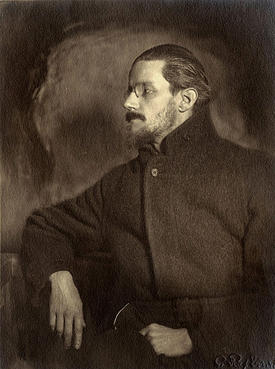
Ezra Pound ranks among the finest poets of his generation, but his greatest trait may have been his eye for talent in others.” That’s the opinion of Ted Gioia in The Daily Beast today, on the 100th anniversary of an unsolicited letter that changed the course of modern fiction.  The object of Pound’s benevolent eye was the unsuccessful young writer James Joyce.

Ted writes:

James Joyce, thirty years old, had faced rejection after rejection during the previous decade. He had completed his collection of short stories, Dubliners, eight years before Pound contacted him—but Joyce still hadn’t found a publisher willing to issue the book. Every time he came close to seeing this work in print, new objections and obstacles arose, and even Joyce’s offer to make changes and censor controversial passages failed to remove the roadblocks.

Joyce had even fewer prospects to publish his novel A Portrait of the Artist as a Young Man. In 1911, his frustration had grown so intense, Joyce threw the manuscript into a fire, and only the quick intervention of his sister Eileen, who pulled the pages out of the flames, prevented the loss of the novel. Joyce had made even less headway with Ulysses, a work he had been planning since 1906. His constant financial pressures and despair over his inability to publish his fiction sapped his determination to push ahead with the future masterpiece.

joyce

S.O.S.

During his late twenties, Joyce explored other ways of earning a living. He tried his hand at setting up a chain of movie theaters in Ireland, and worked at importing Irish tweed to Italy. His opportunities to write for hire declined, and most of his income came from teaching English at Berlitz schools. Joyce worked tirelessly at this humble job, but still needed to rely on constant financial support from his brother to pay his bills.

At this low point, James Joyce received a letter from a total stranger.

“Dear Sir,” it began, “Mr. Yeats has been speaking to me of your writing.” Ezra Pound offered to make useful connections for Joyce, and find places where he could publish his writings. “This is the first time I have written to any one outside of my own circle of acquaintance (save in the case of French authors),” Pound admitted, but he was quick to add: “[I] don’t in the least know that I can be of any use to you—or use to me.”

And then Pound performed miracles.  “Ezra was the most generous writer I have ever known,” Ernest Hemingway said. He estimated that Pound devoted about a fifth of his time on his own writing, and the rest to advancing the careers of other artists. Who knew?

Read the whole thing here.  And it’s nice to know something nice about Ezra Pound among all the nasty things that get said, because, well, it’s Christmas.


<<< Previous Series of PostssepNext Series of Posts >>>