“A lesson in how couples should get along”

March 26th, 2010

Share
Joseph and Marguerite Frank

Joseph and Marguerite Straus Frank (Photo: L.A. Cicero)

One of the more memorable images from the recent Pevear and Volokhonsky talk earlier this month:  Joseph Frank, perhaps the world’s leading expert on Fyodor Dostoevsky, listening attentively in the front row, leaning forward, chuckling, hugging his cane, with his wife, Marguerite Straus Frank, at his side.

I caught Joe before his last class with a small group of a  half-dozen or so students, and asked him what he thought of the translation duo’s gig.  “I knew them twenty years ago in Paris.  He was a translator from the French – of Bonnefoy,”  he recalled.  “I saw him on and off during the Paris years.  Suddenly, he showed up as a translator of Russian with a wife.”

The class asked him about his own latest, a condensation of the thousand-page Dostoevsky: A Writer in His Time — Mary Petrusewicz was recruited to condense the book, he said, since “I couldn’t bear the idea of cutting it myself.” He recalled it was “the heaviest book at the book celebration.”

What do you think of Steven Cassedy’s Dostoevsky’s Religion? Do you know him?” another student asked.

“Yes, Stephen Cassedy was once my T.A.,” he said, and gave a characteristic cackle.

He remembered the young Irish-American teaching assistant — also the author of To the Other Side: The Russian Jewish Intellectuals Who Came to America and Building the Future, Jewish Immigrant Intellectuals and the Making of Tsukunft — taking the trouble to learn Yiddish.

“I was impressed by that fact, since his name is ‘Cassedy’” — commented the Jewish nonagenarian from New York City.

And Joe disagrees with me, regarding my earlier remarks about the effectiveness of translating in rhyme and meter.  “Rhymes highjack the poetry,” he said.  (Not so:  Think Richard Wilbur.  Think Anthony Hecht.  Think Sir Charles Johnston, who inspired Vikram Seth‘s masterful novel-in-Pushkinian verse, The Golden Gate.)

Joe noted the upcoming Pevear/Volokhonsky translation of Pasternak’s Doctor Zhivago (can we wait?)  And perhaps Nicolai Leskov is in their future, as they mentioned in a 2007 Barnes & Noble interview:

Barnes & Noble:  Is there any writer in that period in Russia who readers of English don’t know about at all?

Volokhonsky: Well, it’s not that you don’t know him at all. He is known but only a little in the West, and partly owing to the fact that he is very difficult to translate. His prose is so rooted, so bound with the element of Russian language that it really is hard to convey its qualities in English.

Pevear: Do you have a name?

Volokhonsky: Yes, the name! [LAUGHS] Nikolai Leskov. He has been translated. He has been translated, inevitably, very poorly, and his translations go out of print, then someone revives them, and the cycle repeats itself.

Pevear: It’s the same book that keeps moving from publisher to publisher. If he’s known, it’s for the story that is the basis of the Shostakovich opera, Lady Macbeth of the Mtsensk District. It’s a great story.

Barnes & Noble: Are you going to rectify Leskov’s neglect in the West?

Pevear: We are going to try.

Barnes & Noble: Is there one book in particular that represents his best work?

Pevear: No. He wrote short stories. Well, he wrote longish short stories. And one big chronicle called Cathedral Folk. Slavist teachers are always in agony, because there’s no Leskov for them to use with their students. For Russians, he’s almost equal to Tolstoy. He’s very high. Some people like him even more.

Volokhonsky: But I think it’s exaggeration.

Pevear: He’s the least Western. He’s the least open to Western influences. He’s very Russian. But he’s an extraordinary writer. We’re going to try.

Back to Joe, recalling the visit of the husband-and-wife translating team:  “I was very impressed with their act,” he said.  “A lesson on how couples should get along.” One might say the same of the Franks, pictured here.

“This Dust of Words”

March 24th, 2010
Share

More news from John Felstiner, whose “wreathing” we described two days ago here:

Elizabeth Wiltsee

Elizabeth Wiltsee

This Dust of Words, an hour-long documentary by Bill Rose and based on John Felstiner’s memoir of Elizabeth Wiltsee, will be shown on KQED-TV, Channel 9, this Sunday, March 28, at 6 p.m. — link is here.

felstiner

John Felstiner

Liz Wiltsee, an English major at Stanford, wrote a brilliant senior thesis with John on Samuel Beckett. After that, her life as an aspiring writer took strange turns with a tragic end. John Felstiner figures as a narrator.

John wrote movingly about his student in article a decade ago, here.

Said editor Kevin Cool:

“Elizabeth Wiltsee turned a corner somewhere that led down a dark, strange path, and she couldn’t find her way back. But her descent into mental illness was only part of her story, a story that Felstiner has attempted to make whole. In his care, she emerges alive and full of expression, a sonnet to the undiminishable beauty of a verdant mind on display.”

Byron’s wreath, today’s poets

March 21st, 2010
Share

byronwreathLord Byron died in Greece, 1824.  His body was returned to England by sea on the brig Florida. Mourners lined the streets of London as the black-draped coffin and catafalque went to Great George Street, where it lay in state for a week.

The Greeks of Missolonghi had this laurel wreath (left) made for the coffin — he had been something of a freedom fighter in Greece. The laurel wreath of Byron was eventually returned to the people of Greece.

160  years later, archaeologist and author Patrick Hunt held it in his hands:  “In its old box, all dusty, faded and dried out, yet still intact and said to date from 1824, was this incredible treasure, poetic but real. I will never forget that this box was then placed in my hands.”

fields

Ken Fields, earlier wreathed

So much so that he has reinstated the custom of laurels for his colleagues.  Weaving European laurels from his “Homeric” garden, he wreathed Al Young, then poet laureate of California, in 2007. He followed with British poet and Persian translator Dick Davis, poet Ken Fields, and Pulitzer prizewinning poets W.S. Merwin and  Ted Kooser, a former U.S. poet laureate.

Earlier this month,  he bewreathed John Felstiner (right), author of Can Poetry Save the Earth? (NPR discussed the book last April — podcast and story here.)

davis

Dick Davis, another wreathed poet (Photo: Linda Cicero)

“I’ve been reading John’s work for decades, from his Neruda translations and essays on poetry to his articles in the American Poetry Review and many other achievements, so he’s formative to my own growth as a poet,” said Patrick. “He either knows personally or has worked with every other poet who has been recently wreathed in this revival of the classical tradition. Last but not least, he’s been a great encouragement to many poets who hold him in highest esteem.”

Hunt wreathes Felstiner earlier this month

Hunt wreathes Felstiner earlier this month

“John is not only a muse but a kind man,” he concluded.

John looked “historically right” for the occasion, which took place before a joint meeting of two of John’s current Stanford poetry classes, Patrick told a brief history of ancient laureates with laurel wreaths, also about having held Byron’s wreath in Greece in 1984 and how life-changing that event was. “Then I mentioned how this ancient tradition was being revived in some way with modern poets by using the laurel tree in our Homeric garden. Then John was wreathed…”

“I’m a detective. That’s what a biographer is.”

March 18th, 2010
Share

The San Francisco Chronicle has a short Q&A with biographer Carol Shloss here.  Carol recently settled a groundbreaking lawsuit against the James Joyce estate, which had been persecuting her for some years (see New Yorker article here).

Not much new in today’s article — but we do learn about her current work-in-progress, Modernism’s Daughters, a trilogy that includes the daughters of James Joyce, Ezra Pound, and Sigmund Freud.

We also learn that she’s a dachshund lover and a detective novel fan, currently reading Elizabeth George’s Careless in Red.

Dana Gioia to receive Laetare Medal

March 16th, 2010
Share
dana

Dana Gioia (Photo: L.A. Cicero)

Poet Dana Gioia will receive this year’s Laetare Medal award at the Notre Dame University’s 16 May commencement.  Gioia is former chairman of the National Endowment for the Arts, as well as a poet, essayist, translator, librettist, and man of letters.

The Laetare award, instituted in 1883, is the U.S. Catholic Church’s oldest and most prestigious honor. Following the medal’s presentation, Gioia will offer an address alongside the commencement’s main speaker — this year, Brian Williams, anchor of the NBC Nightly News.

Previous  winners include John F. Kennedy, Sargent and Eunice Kennedy Shriver, Dorothy Day, Walker Percy, Dave Brubeck, Sister Helen Prejean, Daniel Patrick Moynihan, Helen Hayes, and Clare Boothe Luce.  You can read more here.

Gioia’s appointment to the NEA was about the only popular move made by the Bush administration, and one of the few that worked out well. Business Week hailed Dana in 2006 as “The Man Who Saved the NEA.

The award made headlines last year when Mary Ann Glendon declined the honor a month after her selection, and a few weeks before the ceremony.  Because of that, you’d have expected the award announcement this year to have made a little bit more noise.  But hardly a word so far — not even from the usually loquacious New York Times.  A google alert for my own name gave me a heads-up — many of the news clippings so far are citing my 2003 Commonweal article about Dana, which you can read in full here, and so I quickly emailed my congratulations to the poet, who now divides his time between California and Washington D.C.

I met Dana over a decade ago, when I was a free-lance journalist and cold-called him in his Santa Rosa home — a tiny photo of it here, with my profile in 2000.  If awards are given for one of the most generous spirits I know, it should go to Dana, patron saint of free-lance literary journalists looking for good sources and story ideas.  He is even better as a friend.

Linda Cicero’s photo above is from his address at the Stanford University commencement in 2007.  I wrote about that, too, here.

Congratulations, Dana!

“Don’t compare yourself to Tolstoy, young lady!”

March 14th, 2010
Share
jaffe_batuman

Elif Batuman

Who knew that comp lit scholars take so much abuse?

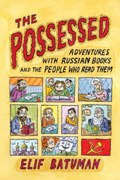
Elif Batuman (I wrote about her here and here and here) gave a reading of her The Possessed: Adventures with Russian Books and the People Who Read Them, at Kepler’s Thursday night, and spilled about the angry letter-writers who attack her.  The subject came up as she was reading her introduction, and paused after the passage that gave away the ending of Eugene Onegin.  She apologized to her audience, and then described one correspondent who had written to complain.

“Why did you have to ruin Madame Bovary?” the writer whined. Commenting on Batuman’s well-known expertise in Russian lit, the irate penpal said she expected Batuman to ruin the endings of Russian novels — “that’s your job” — but why the French ones?  “I know you think that everyone has already read it because it was published in 1867, but I personally was doing other things and only got around to it now.”

Batuman, an appealing author with a slightly goofy manner and the self-deprecating slouch tall girls acquire in adolescence (she’s six-feet tall), seem an unlikely target for anyone’s wrath.  But she also recalled a peeved listener at a reading who interrupted when she compared the “horrible traumatic story I wanted to recreate for the reader”  to the episode in Anna Karenina where the heroine thinks she will die in childbirth, but doesn’t — a variant of Chekhov’s warning about the gun that had better go off by the last act.  “Don’t compare yourself to Tolstoy, young lady!” she was angrily admonished.

Explaining books came naturally to Batuman, whose career began, in a sense, with her Turkish mother asking her to tell her what these great novels “meant.”  Although her mother was thoroughly fluent in English, she was haunted by the sense that there was something missing in her understanding of books she read in English.

Batuman, whose book includes a large section on Samarkand, was interviewed by the Uzbek National Radio last week.  “Maybe I’ll get a lot of angry calls,”elif2 she worried.

During the question-and-answer period, she was asked if Russian novel-lovers fall into Dostoevsky-Tolstoy camps, where does she place herself?  Batuman answered that Dostoevsky is the literary equivalent to theater, with “allegory intensified 10,000 times.”  Tolstoy is the stuff of movies, with costumes, elaborate scenery, and orchestral score.  She falls for Tolstoy.  “Tolstoy is girlie — he wouldn’t like my saying that, but he’s not here anymore, any more than the the Uzbeks are.”‘

She was also asked if she is going to write a Russian novel.  “The Russians already did that,” she replied.

But Batuman is thinking about a novel next.  “Maybe see you all in another 15 years!”


<<< Previous Series of PostssepNext Series of Posts >>>