
Ukrainian poet Ilya Kaminsky: “the wrecked word” confronts the wrecked world.

March 10th, 2022

Share
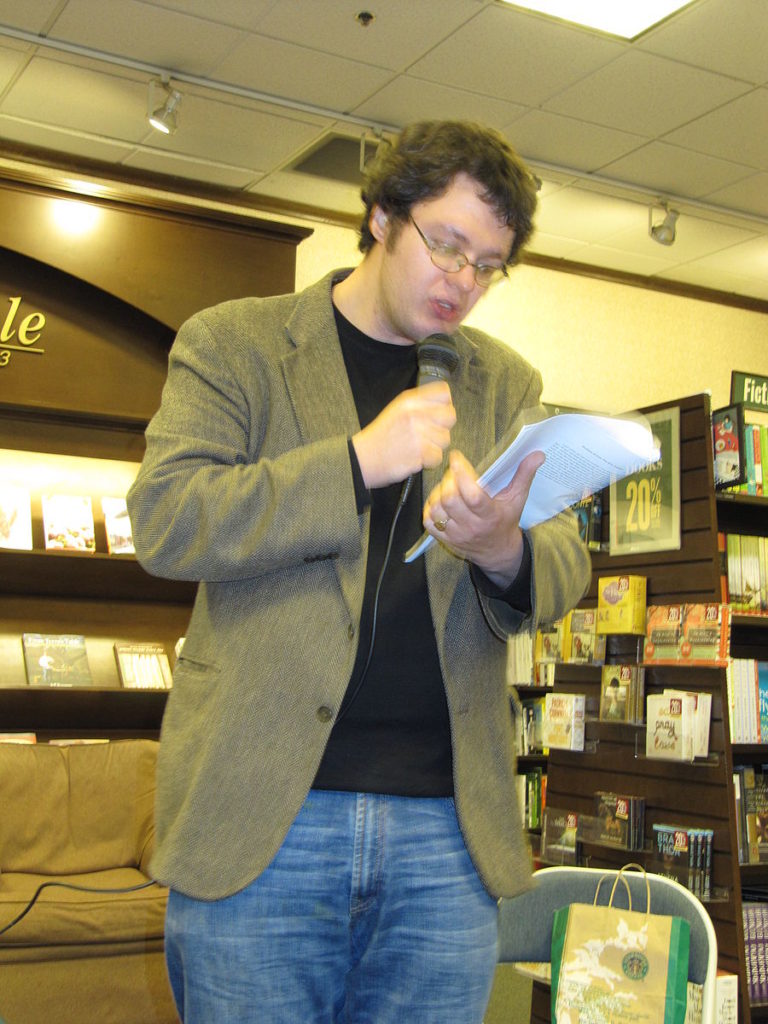
Born in the Odessa, now in America.

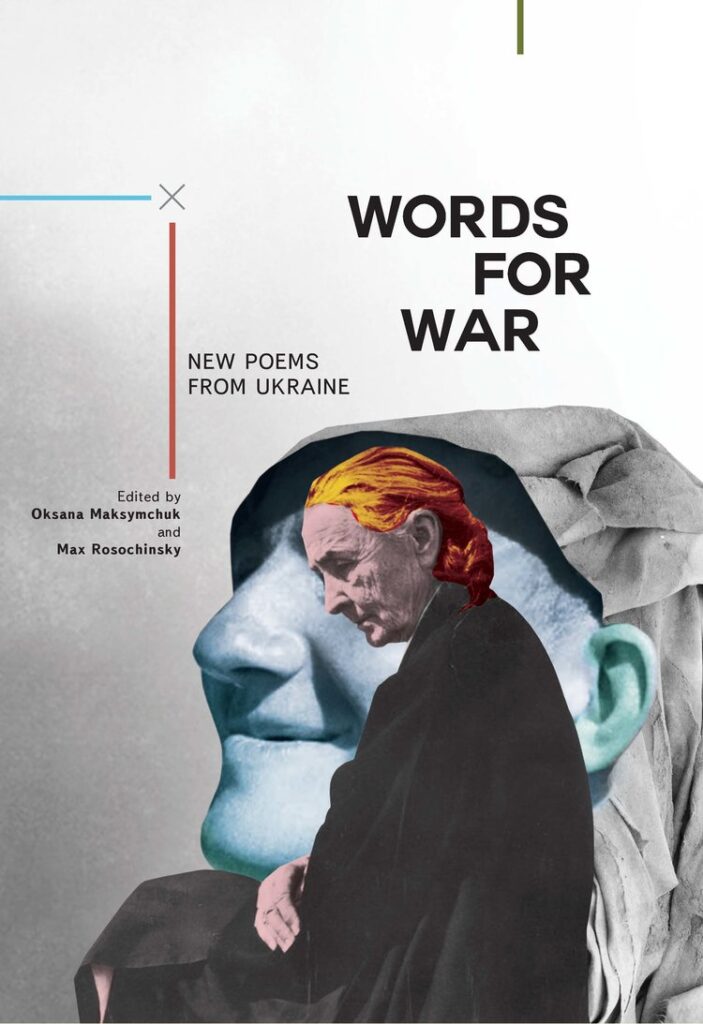
Ukrainian-American Ukrainian-Russian-Jewish-American poet, writer, critic, translator Ilya Kaminsky (we’ve written about him here and here and here) has been much in the news lately, which is often bad news for Ukrainians. Over at Lithub, you can read his 9-part essay on “Ukrainian, Russian, and the Language of War,” excerpted from Words for War: New Poems from Ukraine, published by Academic Studies Press.

Meanwhile, let us here focus on the essay’s section dedicated to the young poet Lyuba Yakimchuk:

In the late 20th century, the Jewish poet Paul Celan became a patron saint of writing in the midst of crisis. Composing in the German language, he has broken speech to reflect the experience of a new, violated world. This effect is happening again—this time in Ukraine—before our very eyes.

Here is the case of poet Lyuba Yakimchuk, whose family are refugees from Pervomaisk, the city that is one of the main targets of Putin’s most recent “humanitarian aid” effort. Answering my questions about her background, Lyuba responded:

“Literature is changed by war.”

I stare into the horizon
. . . I have gotten so very old
no longer Lyuba
just a –ba.

“I was born and raised in the war-torn Luhansk region and my hometown of Pervomaisk is now occupied. In May 2014 I witnessed the beginning of the war … In February 2015 my parents and grandmother, having survived dreadful warfare, set out to leave the occupied territory. They left under shelling fire, with a few bags of clothes. A friend of mine, a [Ukrainian] soldier, almost shot my grandma as they fled.
“Discussing literature in wartime, Yakimchuk writes: ‘Literature rivals with the war, perhaps even loses to war in creativity, hence literature is changed by war.” In her poems, one sees how warfare cleaves her words: don’t talk to me about Luhansk,’ she writes, ‘it’s long since turned into hansk / Lu had been razed to the ground / to the crimson pavement.’ The bombed-out city of Pervomaisk ‘has been split into pervo and maisk‘ and the shell of Debaltsevo is now her ‘debaltsevo.’ Through the prism of this fragmented language, the poet sees herself:

Just as Russian-language poet Khersonsky refuses to speak his language when Russia occupies Ukraine, Yakimchuk, a Ukrainian-language poet, refuses to speak an unfragmented language as the country is fragmented in front of her eyes. As she changes the words, breaking them down and counterpointing the sounds from within the words, the sounds testify to a knowledge they do not possess. No longer lexical yet still legible to us, the wrecked word confronts the reader mutely, both within and beyond language.

Reading this poem of witness, one is reminded that poetry is not merely a description of an event; it is an event.

You can read the rest of Ilya Kaminsky’s essay here. Ukrainian poet, screenwriter, and journalist Lyuba Yakimchuk’s poem “Crow, Wheels” is here.

Ukrainian writer Ilya Kaminsky: “Putins come and go.”

March 1st, 2022
Share

Ukrainian-Russian-Jewish-American poet, writer, critic, translator and professor Ilya Kaminsky shared two tweets on Twitter. I share them with you:

Russia to Putin: “No War!”

February 26th, 2022
Share

Russia’s unprovoked military campaign against its neighbor Ukraine has left many of us asking: What do the Russian people think of Vladimir Putin‘s infamous and deadly adventure? Are it’s cultural leaders speaking out?

Editor-in-chief

One of them has made a powerful and courageous statement.

We’ve written before about Maria Stepanova, author of the acclaimed In Memory of Memory and one of Russia foremost poets and writers. She also has another hat: she is the founding editor of the crowd-funded Colta, a high-traffic Russian online journal that has been called the Russian equivalent of The New York Review of Books.

Here’s what it had to say this week in a front-page editorial about Russia’s attack on its Ukraine, titled simply “No War”:

This morning the Russian government launched a military operation on Ukrainian territory. This is an unbelievable step. In the 21st century, when the world has trended towards reducing violence, including in international relations, this decision throws our nation back to an archaic time, politically and culturally – not even back to the to the end of the twentieth century, but back to the first half, when war still seemed to be a way of solving international problems. Civilized people have always tried to oppose violence, in whatever form it may appear and to whomever it may be directed. COLTA.RU is a publication that deals primarily with cultural issues. But today we cannot got to work as usual, pretending that nothing happened. What is happening now will become and has already become a huge tragedy for millions of people.

Let’s hope Putin listens. The whole world is watching.

Nobel poet Joseph Brodsky to Russia’s leader: “A language is a much more ancient and inevitable thing than a state.”

February 21st, 2022
Share

When American tourists visiting Soviet Moscow asked Russian Nobel poet Joseph Brodsky where they could get the best view of the Kremlin, he responded gleefully: “from the cockpit of an American bomber.”

He left more quietly, however, on a when he was famously expelled from his homeland in 1972 – but not without sending a letter to the head of the U.S.S.R.: Leonid Ilyich Brezhnev, who held that position longer than anyone except Stalin. The poet told Brezhnev he was “leaving Russia against my will, which you may know something about.” Then he made a job plea: “I want to ask you to give me an opportunity to preserve my presence and my existence in the Russian literary world, at least as a translator, which is what I have been until now…” He was denied this modest role.

“We all face the same sentence.”

His letter of June 4, 1972, begins:

“Dear Leonid Ilich . . . A language is a much more ancient and inevitable thing than a state. I belong to the Russian language. As to the state, from my point of view, the measure of a writer’s patriotism is not oaths from a high platform, but how he writes in the language of the people among whom he lives . . . Although I am losing my Soviet citizenship, I do not cease to be a Russian poet. I believe that I will return. Poets always return in flesh or on paper.”

“From evil, anger, hate – even if justified – we none of us profit. We all face the same sentence. Death. I who write these lines will die; you who read them will, too. Only our deeds will remain, but even they will suffer destruction. It’s hard enough to exist in this world – there’s no need to make it any harder.”

He never published the letter. When asked if he should, he replied, “No, it was a matter between Brezhnev and me.” “And if you published it, then it’s not to Brezhnev?” And the poet replied yes, precisely. Ellendea Proffer Teasley recalled in Brodsky Among Us, “Joseph was bold when he approached the famous and the accomplished. It was not that he was egotistical – although he had a strong ego – it was that he took his calling seriously. This is why he felt he had a right to address Brezhnev – he was a poet and therefore equal to any leader.”

Brezhnev never answered. Why would he answer a letter from an impertinent nobody? And Russia never learned. We mourn the catastrophic decisions today to roll back the clock to the 1980s. As Anne Applebaum wrote today in The Atlantic: “Despite everything that was said, everything that was promised, and everything that was discussed, Ukraine will fight alone. At a dinner last night, a Ukrainian woman whom I first met in 2014—she began her career as an anti-corruption activist—stood up and told the room that not only was she returning to Kyiv, so was her husband, a British citizen. He had recently flown to London on family business, but if there was going to be a war, he wanted to be in Ukraine. The other Ukrainians in the room nodded: They were all scrambling to find flights back too. The rest of us— American, Polish, Danish, British—said nothing. Because we knew that we would not be joining them.”

“All tyrannies rule through fraud and force, but when the fraud is exposed they must rely exclusively on force.” ~ George Orwell.

Farewell, Bliss Carnochan: “a patrician mixture of decency, intelligence, and unstinting affability”

February 17th, 2022
Share
“The very pineapple of politeness.” Photo: Brigitte Carnochan

Bliss Carnochan, a kind and benevolent presence for the humanities on the Stanford campus, died on January 24 of congestive heart failure. He was 91.

The professor emeritus of English grew up in Manhattan and had never been farther west than Pennsylvania when he arrived at Stanford in 1960. He never left. Now it’s hard to imagine the campus without him.

“Bliss Carnochan’s passing leaves those of us who knew him feeling downcast and impoverished,” English Prof. Terry Castle wrote in a letter on the Stanford website. “It is melancholy enough to have to speak now in the past tense of Bliss’s tact and kindness and human warmth, the unfeigned delight he took in everyday life and the wider world, the intellectual generosity and comradeship he evinced toward colleagues, students, and friends over many years at Stanford. He was, as Mrs. Malaprop might have said, the very pineapple of politeness: a patrician mixture of decency, intelligence, and unstinting affability. Much missed, no doubt, will be those strange, deep, exuberant bursts of laughter he sometimes emitted—awkward, boomingly so, but somehow always sweet nonetheless: the perfect reward, one felt, when one had been lucky enough to pass on some tidbit of academic idiocy he particularly relished. Bliss Carnochan was a stunning, splendid man; Bliss the scholar likewise.”

Terry Castle

“Bliss continued to write according to his own elegant sensitive lights, in a style at once pellucid and bracing, witty and relaxed. His prose was a kind of neoclassical slow-cookery; and I and many others learned a great deal from him about writing well.”

We’ve featured him in the Book Haven, though collecting old posts is not as much fun as sitting with him over coffee at the Stanford Bookstore:

Scotland expert Bliss Carnochan: “We’re all Scottish now.” On the 2014 Scottish referendum.

“Bliss Carnochan names the worst poet evah.” Hint: Ever hear of William McGonagall?

How Scots invented golf … and some pretty fine single malts, too. Bet you didn’t know the Scots invented golf.

Lazy winter hours with the TLS. A few paragraphs from the review of his then-newest book, with the unlikely title, Golden Legends: Images of Abyssinia, Samuel Johnson to Bob Marley.

Do you get the feeling that he’s of Scottish descent?

Bliss Carnochan is survived by his wife, the photographer Brigitte Carnochan (one of her photographs is featured on the Book Haven here), five children and 10 grandchildren. All joined him last Christmas Day to celebrate his 91st birthday. A memorial service is being planned for later in the year at the Stanford Humanities Center.

Terry Castle concluded with a direct address: “Though you achieved a magnificent old age (while somehow always managing to look fifty years younger than you were) our bliss, we find, has indeed been momentary: date-stamped, ephemeral, too brief for words. Or so it must feel – acutely enough – from here on out. Farewell, old friend; I miss you starting now.”

What does it take to be a “keeper”? Mark Anspach’s Girardian take on Pink Floyd’s Roger Waters, and more!

February 11th, 2022
Share
She’s a “keeper.” Unlike the other four wives. (Photo: Youtube)

Why do we want what we want – especially in love? It was a question that preoccupied René Girard. Mostly, he claimed, others do the choosing for us, without us knowing it. Anthropologist Mark Anspach (we’ve had guest posts from him here and here) considers Roger Waters, co-founder of the Pink Floyd band, and his recent marriage to his fifth wife. A longish excerpt from “Mimetic Desire and Serial Monogamy: the Case of Roger Waters over at Geoff Shullenberger‘s new blog, Outsider Theory:

“Did anyone ever tell you that you have beautiful cheekbones?” That was the opening line rock icon Roger Waters used with Kamilah Chavis, the woman he married in October 2021. But it wasn’t her face that first drew Waters to Chavis. In fact, during their first meetings, she kept her back turned to him.

Waters told the story in a widely-quoted 2018 interview with Argentine media outlet Infobae. The reporter asked, “Is Kamilah an artist?” No, Waters replied. “She worked in transportation.” More precisely, she was a chauffeur.

“I actually met her at one of my concerts a couple of years ago,” Waters explained. “She was driving the car that was taking me. I was in one place for two weeks and there were many transfers between the hotel and the venue. My security sat in the front with her and they talked, while I stayed in the back. I don’t know, something about her attracted me…”

There was something about her, but what could it be? It wasn’t love at first sight. Waters spent most of their time together staring at the back of Kamilah’s head. She didn’t even talk to him. So what sparked Roger’s interest in Kamilah? Was it her lovely black hair? The way she held her head? Her entrancing perfume?

Mark Anspach gives us his own take.

Curiously, when Waters recalls the attraction he felt for his future bride, nothing he says is about the woman herself. It’s all about the circumstances: she was driving the car, up front with the security, while Waters rode in back. That hardly sounds like a romantic setting, yet he was mysteriously drawn to her. Why?

Waters gave little clue when announcing his wedding on social media. He said only, “I’m so happy, finally a keeper.” This is less an ode to his new bride than a back-handed slap at his previous wives. Clearly, Waters had reflected on why his first four marriages ended in divorce and identified a common flaw in all his exes: they weren’t “keepers.”

Read the rest of it here. It’s not only insightful, it’s fun. Wait! Wait! Here’s also Bill Benzon’s “Crisis in Shark City: A Girardian reading of Steven Spielberg’s Jaws.” As a bonus prize, a Girardian take on Alfred Hitchcock’s 1955 To Catch a Thief:

As you may know, René Girard is a theorist of imitation, desires, violence and sacrifice. His core concept is that of mimetic desire, a desire which one person acquires by imitating the actions of another. Take Alfred Hitchcock’s 1955 film, To Catch a Thief [3]. Cary Grant plays John Robie, a cat burglar who is retired to the French Riviera along with the rest of his gang, all of whom have been paroled in recognition of their work for the French Resistance. A recent string of burglaries leads the authorities to suspect Robie because the burglaries follow his old modus operandi.

In the (somewhat involved) process of trying to clear himself Robie arranges to go swimming with a young heiress, Frances Stevens (played by Grace Kelly). Robie arrives at the beach where he is met by Danielle Foussard (played by Brigitte Auber), who is the young daughter of one of his old comrades in the Resistance. They swim out to a raft where Danielle proceeds to flirt with Robie. Frances swims out to them, sees Danielle flirting with Robie, and decides that she will pursue Robie. She is imitating Danielle’s desire. In Girard’s terms, her desire is thus mediated, it is mimetic desire. Danielle and Frances thus become rivals and rivalry can lead to violence. Though we don’t know it at this point in the movie, Danielle is the cat burglar. She too is imitating Robie.

Read the rest about Jaws here.


<<< Previous Series of PostssepNext Series of Posts >>>