
A good man is hard to find: Carl Weber, Tony Kushner, and Bertolt Brecht onstage in Texas

June 18th, 2011

Share

Jane Horrocks as Shen Teh in 2008

What, exactly, is the title of the play? In the dark years between 1939 and 1941,  Bertolt Brecht wrote  The Good Woman of Szechuan – or sometimes its Szechwan. More commonly nowadays, the play is called The Good Person of Szechwan – or Szechuan. I’ve even found the occasional The Good Soul of Szechuan.

The original is “mensch” – a word that has more slangy connotations today. Elena Danielson, who said it’s one of her favorite plays, agrees that “person” doesn’t quite work, “a bit too sterile for ‘der gute Mensch.'”

On the other hand, without de-gendering the noun, how else would you keep the link to Genesis, where God promises to save the cities of Sodom and Gomorrah if Abraham can find a handful of good men?  I also felt unexpected Job-like resonances in the play, when the gods come down to test the prostitute Shen Teh, known for her love for her neighbors, and someone who (again like Abraham) entertains angels unawares. Despite the gods’ insistence, Shen Teh says she’s not good, and learns after many trials, “To be good and to live splits me in two like lightning.”

Carl Weber with Florentina Mocanu (Photo: L.A. Cicero)

The three gods who visit the impoverished Szechuan claim,  “Many, even among the gods, doubted that there were any good people here.” Is it true, the gods wonder, that “good deeds destroy the doer”?

In any case, last week I finally got a chance to watch last year’s Trinity University production directed by Carl Weber, a protégé of Brecht and a veteran of the Berliner Ensemble. Carl loaned me the DVD after his return from Austen.

Charles Spencer, writing in The Telegraph about a production at the Young Vic in 2008, called the play “an utter stinker” with “glib Marxist sermonising.” Obviously, I don’t agree, though I think Brecht sets up a straw man of goodness – a “Saint Never-to-Be,” as one of one of the characters sings.  Goodness is more than being a patsy.

Tony Kushner's translation of Brecht

Nevertheless, only a few minutes into the DVD, I found myself scrawling down lines from the play.  No surprise – the translator is Carl’s former student and protégé, Tony Kushner, of Angels in America fame (he’s interviewed in my article on Carl here).

According to the gods, “This world can be redeemed if one person can be found who has over come this world – just one.”

The human characters in the play protest, “The world is too cold!” to sustain human charity, to which the gods offer their intransigent reply, “Because people are too weak!”

As for the Sodom-and-Gomorrah link – aha! I’m on to something.  According to an obscure footnote in Wikipedia:

Mallika Sarabhai in Indian adaptation

In Munich in 1924 Brecht had begun referring to some of the stranger aspects of life in post-putsch Bavaria under the codename ‘Mahagonny’. The Amerikanismus imagery appears in his first three ‘Mahagonny Songs’, with their Wild West references. With that, however, the project stalled for two and a half years. With Hauptmann, who wrote the two English-language ‘Mahagonny Songs’, Brecht had begun work on an opera to be called  Sodom and Gomorrah or The Man from Manhattan and a radio play called The Flood or ‘The Collapse of Miami, the Paradise City’, both of which came to underlie the new scheme with [Kurt] Weill.

I was prepared for didacticism, and I got it.  But I threaded through  Helen M. Whall‘s online “The Case is Altered: Brecht’s Use of Shakespeare” and found this: “In many ways the story of Szechwan is a parodic version of Sodom and Gomorrah.  Within that frame Brecht mocks many other Old and New Testament parables, including Elijah’s visit to a poor woman and Christ’s miracle at Cana.”

Well, call me thick – but I didn’t see it as parody or snark. Perhaps it was Tony Kushner’s luminous translation, or perhaps it was Carl’s skilled direction, even with amateur performers, that gave the play a sense of the miraculous as the gods come down among us, looking for a good man – or in this case, woman. Or maybe it was Brecht’s searching for new answers to very old questions:  What is goodness?  And can it survive uncorrupted in a world where “the hand you extend to the poor is torn from you,” as Shen Teh says? “The world cannot go on as it is.  No one can stay good here.”

I may have come up with different answers, but Brecht’s play, in Carl’s direction, for a few hours renewed my sense of wonder at this strange and tragic world.
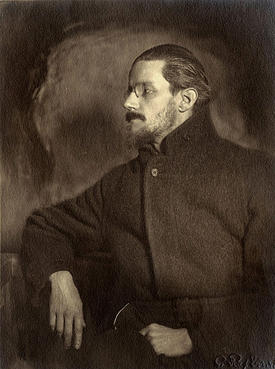
The world celebrates Bloomsday

June 16th, 2011
Share

Coming soon: Public domain for writings

Happy Bloomsday, the day set aside to celebrate the life of James Joyce and relive the events in his novel Ulysses, all of which take place on June 16, 1904, “a day which for some of us is far, far more important than Midsummer,” says author John Naughton.

Time magazine offers five ways to celebrate.  The easiest?  “Drink up!”  Complimentary drinks at the Ulysses’ pub in downtown New York, but for those of you who can’t make it, you can probably track down a Guinness at the local Safeway.

Not to be outdone, the Los Angeles Times offers eight ways to celebrate – but here’s the funnest:  a rare recording of James Joyce reading from his own writing, pointed out by Boing Boing in 2009. The James Joyce Centre says that he was recorded reading from his work in 1924 and 1929 at the urging of Sylvia Beach, publisher of Ulysses.

Naughton notes, “When I first heard it I was astonished to find that he had a broad Irish-country accent. I had always imagined him speaking as a ‘Dub’ — i.e. with the accent of most of the street characters in Ulysses.”

There’s even a blog to commemorate the whole occasion:  Ulysses Meets Twitter 2011.

Still not enough?  Think of this:  James Joyce’s work begin migrating into public domain in January.  That’s enough to bring a smile to this lady’s face.

Meanwhile, a different kind of celebration below:

Postscript: Dave Lull pointed out a Wall Street Journal article recounting celebrations in Croatia, Australia, Shanghai, Norway and Argentina. (And Dublin, of course.) It’s here.

René Girard’s Sacrifice and Dana’s daily reads

June 15th, 2011
Share

When I ran across Bill Johnsen at the 50th anniversary fête for the seminal Deceit, Desire and the Novel a few months back he gave me three copies of René Girard‘s newest volume, a small, elegant paperback called Sacrifice.  One was for me, he said.

“Who are the other two for?” I asked.  “Two famous people you know,” said the Michigan State University professor.   Did he have anyone in mind?  “Yes, Dana Gioia,” he said.

The turnabout was sweet.  In 2007, when Dana was invited to be a commencement speaker at Stanford, Dana was knocked for not being famous enough.  Gioia acknowledged some students’ disappointment: “A few students were especially concerned that I lacked celebrity status. It seemed I wasn’t famous enough. I couldn’t agree more,” he said. “As I have often told my wife and children, ‘I’m simply not famous enough.'”

I sent him the book with that comment, and added a poem by Tomas Venclova and another little-known one by Rainer Maria Rilke, in the James Leishman translation.

Famous

Famous

Bill gift was a nice followup to an earlier event: One of the joys of life is being to introduce your favorite people to each other – so I was honored to have the chance to invite Dana to Palo Alto to meet René some months back.  I hoped the meeting would be fruitful.

And it was, I learned, in the followup that followed the followup.  A few minutes ago, jazz scholar Ted Gioia‘s Facebook page offered a link about his big bro.  From Evan R. Goldstein Q&A in The Chronicle of Higher Education, “My Daily Read: Dana Gioia“:

Q: What books have you recently read?  Do they stand out?

Not famous enough in 2007 (Photo: L.A. Cicero)

A. I still read a great many books. I travel almost every week, so I have long stretches of quiet time on planes and in hotel rooms. I’m also a terrible insomniac so I read for hours late at night.  At the moment I’m reading Meryle Secrest’s Modigliani as well as Peter Humfrey’s Painting in Renaissance Venice, which must seem like an odd pair chronologically.  I’ve also been reading through René Girard’s books on mimetic theory and just finished Sacrifice, which deals with religious violence in the classical Vedic texts. I also enjoyed Kevin Starr’s survey of  California historians, Clio on the Coast.

During my visit to his Santa Rosa home last summer, we had discussed some of the same themes that emerged in the Q&A.  Here’s what I wrote then:

“Dana, Mary, and I sipped wine on the balcony overlooking the valley and the hills.  We talked about the increasing commercialization of society, where marketed celebrities famous for being famous in turn market corporate brands for us to buy — how to keep Guess jeans, Netflix, Jimmy Choo shoes, and apps from monopolizing our remaining memory banks and our lives?  We discussed the crazily increasing speed of 21st century communications and life.  He liked, he said, living in a place where impressions are taken in and thought occurs no faster than the speed of walking.”

He’s clearly still of the same mind – and he dismisses the celebrity phenomenon he had decried in 2010 (and been denied in 2007):

Q. Do you use Twitter?  If so, whom do you follow?

A. I  never use Twitter. In fact, I am deeply suspicious of the massive communications overload that the media obsesses over and glorifies. So much of this activity is just covert advertising for products and celebrities. The objective is to capture and commercialize every moment of people’s time. What we really need is more quiet and less phony connectivity.

Dana’s reading is far more disciplined than my own.  My attention, admittedly, has been blown to bits by the world wide web.  Meanwhile, it’s good to know Dana and I have something in common:  I am currently making my way through René’s classic Deceit, Desire and the Novel, with plans to hit Things Hidden Since the Foundation of the World next.

George Orwell: Love, sex, religion, and ghosts

June 13th, 2011
Share

Aaaaa–choo!

I have to confess that I’d never had a thought, one way or ‘tother, about George Orwells views on anything supernatural. Frankly, I didn’t know that he had any – that is, until Dave Lull sent me a link for the following piece, Robert Gray‘s “Orwell vs. God,” from the most recent edition of The Spectator.

It probably won’t strike many as too much of a surprise that Orwell (a.k.a. Eric Blair) had a nearly allergic reaction to religion.  But that’s far too simple a characterization of a complex, intellectually tortured, relationship.

Yet as Orwell approached death, his intolerance of religion seemed to relax. In his last year he was delighted to receive a letter from Jacintha Buddicom, whom he had met at the age of 11, and who had become, during his teenage years, the first girl seriously to attract him — though his urgent desire was never returned. In her memoir, Eric and Us (1974), Jacintha Buddicom recalled how the young Eric Blair had loved ghost and horror stories, and how — jokingly, of course — he had given her a crucifix to keep away the vampires. Half the people walking the streets, he had speculated, were ghosts.

As long as his appetite for horror had been confined to imaginary worlds, he had been able to retain a capacity for joy in the real one. Jacintha Buddicom remembered him as a notably happy boy, and her memoir shows him full of kindness and fun, vastly different from the image he later purveyed of the miserable schoolboy at St. Cyprians, and still further removed from the misanthropic cynic who emerged at Eton.

But then in his first year at Eton Orwell had suffered a severe trauma. Infuriated by the bullying of an elder boy called Philip Yorke, brother of the novelist Henry Green, Blair and his friend Steven Runciman had constructed a wax model of their persecutor, and torn off one of the legs. Shortly afterwards Yorke broke his leg; a few months later he died of leukaemia. Sheer coincidence, no doubt, but deeply disquieting for the boys who had created the model. Runciman remained all his life an enthusiast for the occult; Eric Blair, perhaps more profoundly shocked, thenceforward shied away from any suggestion of the supernatural. Evil was clearly rampant, whereas ‘the good and the possible never seem to coincide’. It was at about 14, he later confessed, that he had abandoned his belief in God.

But that’s not all.  Gray continues:

Thanks to Animal Farm...

Yet seven months before Orwell died, he wrote to Buddicom, insisting that there must be some sort of afterlife. The letter, unfortunately, is lost, but Buddicom remembered that he had seemed to be referring not so much to Christian ideas of heaven and hell, but rather to a firm belief that ‘nothing ever dies’, that we must go on somewhere. This conviction seems to have stayed with him to the end: even if he did not believe in hell, he chose in his last weeks to read Dante’s Divine Comedy. [I wonder which translation – ED.]

In his will Orwell had left directions that he should be buried according to the rites of the Church of England. Of course no one was better qualified to appreciate the beauty of the Book of Common Prayer; nevertheless the request surprised some of his admirers. A funeral was duly held at Christ Church in Albany Street; and David Astor, responsible for the arrangements, asked if his friend’s body might be interred in a country churchyard, at Sutton Courtenay, in Berkshire.

There was, however, a hitch. One of the churchwardens at Sutton Courtenay, a farmer, seemed doubtful that permission should be given. Had this fellow Orwell, or Blair, or whatever, really been a sound Christian? Fortunately the vicar had the inspired idea of showing the agricultural churchwarden a copy of Animal Farm. It was a title which instantly removed all scruples.

And that’s where he remains.

There’s lots more to the story – check out The Spectator article.

By the way, Jacintha Buddicom was the recipient of more than distant yearnings – John G. Rodwan’s  fascinating, and very well-informed, discussion of hot, steamy sex … well, the desire for hot, steamy, sex, anyway… under the stuffy title, “George & Jacintha: On the Limits of Literary Biography,” is here.

Postscript on 6/14:  Dave Lull wrote to add a note on a parallel theme, a review of David Lebedoff’s The Same Man: George Orwell & Evelyn Waugh in Love and War – it’s reviewed briefly in “A Study of Two Masters of English Prose,” by John P. Rossi.  The thought extends a passage from The Spectator article:  “Perhaps Evelyn Waugh divined something of Orwell’s buried spirituality when he wrote to congratulate him on Nineteen-Eighty-Four, and subsequently visited him in the nursing home at Cranham in Gloucestershire. On the other side, one of Orwell’s last attempts at writing was to draw up notes for an essay on Waugh, who, he considered, ‘is abt as good a novelist as one can be (i.e. as novelists go today) while holding unacceptable opinions’.”

More on “taking responsibility” and other hackneyed phrases

June 13th, 2011
Share
(Image adapted from the Tumblr this isn't happiness, via ffffound)

(Image adapted from the Tumblr this isn't happiness, via ffffound)

My call to arms a few days ago (“Orwell watch #9:  ‘I take full responsibility for...'”) was picked up by Andrew Sullivan in The Daily Beasthere.  The passage he highlights:

I suspect the phrase “take responsibility for” is actually a journalists’ invention, and people like Weiner picked it up from the media, rather than his heartfelt intentions. As George Orwell said in “Politics and the English Language,” this one could be “killed by the jeers of a few journalists.” I call out to journalists everywhere to jeer this phrase out of existence – unless it really means taking responsibility, the way I “took responsibility” for, say, raising a child, by paying for her upbringing, nursing her through illness,  attending back-to-school days, and preparing dinner every night.

Sure would be nice if we could we could drive this phrase into late-night comedy, wouldn’t it?  This expression has been due for the slaughterhouse since the IRA mayhem in the 1960s, and has made its small contribution to dulling our sense that words have meaning, and are meant to convey our feelings, thoughts, and intentions – not conceal them.

Language fails

Meanwhile, the post generated some interesting conversation over at Frank Wilson‘s Books Inq. I was singled out, rightly, for a little criticism from Art Durkee:  “Calling [Osama] bin Laden‘s death ‘liquidation’ is also pretty Orwellian, it seems to me. Let’s call a spade a spade: it was a retaliatory political assassination.  But then, a great deal of political euphemism is and always has been Orwellian.”

Liquidation is indeed a strange term – did he dissolve into water? “Liquidation” sounds like the final sale at a failing bookstore, anyway. A colleague corrected me when I said “murder,” arguing that murder was a legal term, calling for the prosecution of the murderer.  One is at a loss – what neutral term can one say nowadays? Osama bin Laden’s “offing”?

Art’s p.o.v.:

“I don’t think there is a neutral term. I think you have to call an assassination what it is.

I think we have to be honest when murder is murder, and not whitewash it. (The best argument, for example, that I’ve heard against the death penalty is that it means that murder is criminalized for anyone to commit except the state.) Similarly, assassination needs to be called what it is, and acknowledged as the political tool it has always been, sanctioned or otherwise.

History may show if this particular sanctioned assassination (sometimes called a ‘sanction,’ or ‘termination with extreme prejudice’) was the right and good thing to do. Lots of people are claiming that already, but they’re also ignoring what making someone into a martyr can do. It’s a tricky call, and those who set policy ought to lose sleep over it.

But that’s the whole pattern that Orwell pointed out, isn’t it: the neutralization of language into mechanical, denatured, unemotional, technical terminology that allows one to deal with humans as dehumanized. Turn people into inhuman statistics, and you can sleep at night when you talk about ‘collateral damage,’ or ‘friendly fire,’ for example. Do that kind of neutralization of language enough, and you dehumanize yourself as well, Orwell warned.”

And so did Mark Twain, in ‘The Way Prayer.'”

Thoughts?

Orwell Watch #10: Literary criticism, or cut-and-paste?

June 11th, 2011
Share

"Astonishing"

Joe Queenan, in his 2007 “Astonish Me,” describes his fixation with books that are called “astonishing.”  Hence, he’s got a lot of reading to do:

These are good times for the astonishable reading public. Among the masterpieces by Orhan Pamuk, who won last year’s Nobel Prize for literature, was The New Life, described by The Times Literary Supplement as ”an astonishing achievement.” Pamuk’s Nobel coincided with the premiere of a Court TV series based on James Ellroy‘s My Dark Places, a book that had been quite accurately described by The Philadelphia Inquirer as ”astonishing … original, daring, brilliant.” Not long before, Ayelet Waldman came out with Love and Other Impossible Pursuits, which, while apparently not astonishing in and of itself, did include a character that the novelist Andrew Sean Greer described as ”astonishing.” Then, Abigail Thomas published A Three Dog Life, singled out by Entertainment Weekly as ”astonishing,” and an ”extraordinary” love story — ”Grade: A.” Personally, I find the Grade A business redundant; if a book is astonishing, you’re obviously not going to give it a B.

Which brings us to Ward Six‘s “Literary Blurb Translation Guide,” a guide to literary grade inflation.  Here’s some of the site’s shortlist:

“brilliant” = smarty-pants
profound” = written by old person
“taut” = limited vocabulary

"Pellucid"

“finely wrought” = namby-pamby
clever” = thinks it’s being clever
“luminous prose” = too many goddam words
“a tour-de-force” = threw it across the room
“a triumph” = huge advance
“unflinching artistry” = lots of boobs and stabbing
“grabs you on page 1 and won’t let go” = stuck reading it on long flight
“achingly beautiful” = really long sentences
“a story for the ages” = ripoff of Tolstoy
“best of the year” = only thing I’ve gotten around to reading
“deeply imagined” = makes no sense
“incredible range and breadth” = all over the place

"Astonishing"

“radiant” = already been blurbed by people more famous than me
“rich language” = not enough paragraph breaks
“goes straight for the heart” = sappy
“trenchant satire” = poop jokes
“a small gem” = will sell five hundred copies, tops
“you’ll feel forever changed” = you will never get those hours of your life back
“searing…glorious…a fury of dazzling transcendence” = I’m just stringing random words together now

Ward Six readers offered more:

From Sung“astonishing” = cover is glossy instead of matte

From Violentbore“bildungsroman” = main character is younger than me

Michael Garberich said “My favorite has always been ‘uproarious’ – You might not laugh, but you know you’re supposed to at some point.”

From Aaron“Deeply felt” = astonishingly narcissistic.

Here’s Russell:

haunting = someone dies

pellucid = someone drowns

galloping = someone gets thrown from a horse

"Astonishing"

It keeps you honest.  I have to admit to an over-reliance on some of the clichés these folks have targeted. As George Orwell writes in “Politics and the English Language“:

Meaningless words. In certain kinds of writing, particularly in art criticism and literary criticism, it is normal to come across long passages which are almost completely lacking in meaning. Words like romantic, plastic, values, human, dead, sentimental, natural, vitality, as used in art criticism, are strictly meaningless, in the sense that they not only do not point to any discoverable object, but are hardly ever expected to do so by the reader. When one critic writes, “The outstanding feature of Mr. X’s work is its living quality,” while another writes, “The immediately striking thing about Mr. X’s work is its peculiar deadness,” the reader accepts this as a simple difference opinion. If words like black and white were involved, instead of the jargon words dead and living, he would see at once that language was being used in an improper way.

Orwell Watch:  Collect the whole set!

Orwell Watch #9: “I take full responsibility for…”

Orwell Watch #8:  “I know you’re disinterested in this, but…”

Orwell Watch #6:  “Like” and the culture of vagueness

Orwell Watch #5: Before we shoot off our mouths again…

Orwell Watch #4: Jared Loughner:  Madman, terrorist, or both?

Orwell Watch #3:  Please. No “gifting” this Christmas.

Orwell Watch #2: Murder in Yeovil

Orwell Watch #1: Paul Krugman vs. George Orwell. (Hint: Orwell wins.)


<<< Previous Series of PostssepNext Series of Posts >>>