The upshot: “Guardian” contest for blurbing Dan Brown

July 14th, 2010
Share

We are disappointed Alison Flood did not select a winner from the 39 entries submitted to her contest for over-the-top blurbs for the bookjackets of  Dan Brown’s The Da Vinci Code (read them here) at The Guardian.   (We discussed the contest a few days ago here.)  The Book Haven has selected its own top three favorites, listed in no particular order:

From Albanick:

…The words seem to blossom on the page so majestically as if to look the reader gently in the eyes and caress his hair. As a heterosexual man, I have no trouble admitting that after being penetrated by Mr. Brown’s soul, I spent hours weeping naked on the bathroom floor pleading to the cosmos that there might someday be a way for me to become pure enough to read the sequel.

From Happyjoel:

On the first day, we are told, God spoke – and with his “word” created all that exists. After reading Dan Brown’s masterpiece “The DaVinci Code,” you are left understanding what it is to create the entire universe with mere words. Each page like the act of creation by a compassionate and passionate deity, Dan Brown draws emotion forth from the wellsprings of the soul like the Diviners of old searching for water that would quench the thirst of the nations. Somehow his words both stop time and transcend it – you feel at once like a young child discovering magic, mirth and magnificence for the first time, and like a wizened veteran looking back and smiling at this thing we call – life.

From Trinitylam:

By reading this book I was once again bathed in the warm of my mother’s effluvium and slid from the unforgiving crimson womb into a beautiful blue florescent world, and then slapped, shaken, and suckled to life by the teat of Brown’s literary genius.

He has a point.

July 13th, 2010
Share

Have we lasted several weeks without mentioning that is the year of Mark Twain — the centenary of his death?

In keeping with the festivities, PBS has an “exclusive”:  A 10-page handwritten essay (all pages viewable here) that has been sitting more than four decades at UC-Berkeley. It was written in either 1889 or 1890, a time that coincided with the rise of “yellow journalism.”  It’s target:  the interview.

As a journalist, and occasionally the subject of an interview, I have to concede that he has a point:

Twain on "the interview"

“No one likes to be interviewed, and yet no one likes to say no; for interviewers are courteous and gentle-mannered, even when they come to destroy. I must not be understood to mean that they ever come consciously to destroy or are aware afterward that they have destroyed; no, I think their attitude is more that of the cyclone, which comes with the gracious purpose of cooling off a sweltering village, and is not aware, afterward, that it has done that village anything but a favor. The interviewer scatters you all over creation, but he does not conceive that you can look upon that as a disadvantage.”

“Yes, you are afraid of the interviewer, and that is not an inspiration. You close your shell; you put yourself on your guard; you try to be colorless; you try to be crafty, and talk all around a matter without saying anything: and when you see it in print, it makes you sick to see how well you succeeded.”

“Now his interruptions, his fashion of diverting you from topic to topic, have in a certain way a very serious effect: they leave you but partly uttered on each topic. Generally, you have got out just enough of your statement to damage you; you never get to the place where you meant to explain and justify your position.”

PBS also discussed that inevitable topic, the publication of Mark Twain’s autobiography for the first time this year.  But will the book say anything new?

Twain scholar Shelley Fisher Fishkin is uncertain:  “I really can’t speak to what volume 1 of his autobiography will ‘reveal’ since I haven’t read it yet — although I probably have, in bits and pieces, in the Mark Twain Papers and in the various partial forms in which it has already been published (decades ago)”:

“The reason that it’s hard to tell what will be there is that it was dictated & Twain talked about whatever he felt like recalling. It is completely non-chronological — a strange grab-bag of whatever was on his mind. I included at least one piece (maybe two, I forget) from it in my Animals book.

It will be interesting to see what turns out to be in it!  Not necessarily any deep, dark secrets that we aren’t familiar with already in some form– particularly from all the biographies.”

A pessimistic lawyer, an optimistic dissident, and a fatwa

July 12th, 2010
Share

Scott Turow talks very briefly about his new book here.  What’s the difference between his 1987 hit, Presumed Innocent, and this season’s Innocent?

“The practice of law is not the same,” he says. “The veneer has worn away. People realize that private practice is about money, and public practice is often about politics. These facts—which were demurely hidden from the public and sometimes, among lawyers, from themselves—are now in the open.”

***

Milani in the classroom (Photo: Toni Gauthier)

The same Stanford Magazine issue also profiles author and leading Iranian dissident Abbas Milani (we’ve written about him here and here).  In the article, Milani recalls a 2006 dinner at the Stanford home former Secretary of State George Shultz, where President Bush was a guest:

“When Bush met Milani, the president told him to stay after the other guests left. ‘I want to talk to you one-on-one,’ Bush said. Milani and Bush chatted privately for 15 minutes. Bush asked if there were any reliable intermediaries who could negotiate with the mullahs on Washington’s behalf. As they were leaving, Milani told Bush, ‘You know, you’ve got a lot of popularity in Iran for standing up to these guys.’ The president wheeled around and stared at Milani. Then he said, ‘You’re not bullshitting me, are you?'”

Milani seems an eternal optimist.  The most unambiguous supporters of democracy tend to be those who didn’t grow up under it. If democracy happens in Iran, would Milani board a plane for Teheran?

“Milani considers the question for a while. Outside, it has grown dark. ‘Many of my friends who live there tell me, even if you can come back, don’t. The Iran you have in your mind, that you love and miss, is lost. These guys have created a different animal.’

Then Milani brightens. ‘Regimes in my view are like relationships,’ he says. ‘If you have a bad relationship, the worst of you comes out. If you are in a good relationship, you do things you never thought you were capable of. You see colors you never knew existed. Democracy is like a good relationship. It really brings out the best in people.'”

His books have been banned in Iran, and he was last summer put on trial in absentia as “one of the most important leaders of the opposition.”

Meanwhile, also in Iran, Sakineh Mohammedi Ashtiani, an Iranian mother, could be put to death by stoning (or other means).  Sign an electronic petition for her here.

***

Molly Norris

Elsewhere in the Middle East:  Yemeni-American cleric Anwar al-Awlaki is not a forgive-and-forget kind of guy.  He’s placed Molly Norris — the cartoonist  who helped launch the recent “Everybody Draw Mohammad Day!” before distancing herself from the campaign — on an execution list, with these words: “A soul that is so debased, as to enjoy the ridicule of the Messenger of Allah, the mercy to mankind; a soul that is so ungrateful towards its lord that it defames the Prophet of the religion Allah has chosen for his creation does not deserve life, does not deserve to breathe the air.”

Read about it here and here.

She joins a growing class of cartoonists, thinkers, activists and filmmakers who now must have lifetime protection by bodyguards, 24/7.

UPDATE 7/14 — Article at the Huffington Post here.

***

The Book Haven and yours truly got a nice mention in the thoughtful, often provocative Anecdotal Evidence — in a post called “Solitary, Silent, Compellingly Warm” (no, Patrick Kurp was not referring to moi).

The whoredom of the blurb

July 10th, 2010
Share

So how do you decide to buy a book?  Do you buy it on the recommendation of some famous author who touts the book in a pithy blurb on the back jacket?  If so, you’re like 62% percent of the buyers who do precisely that.

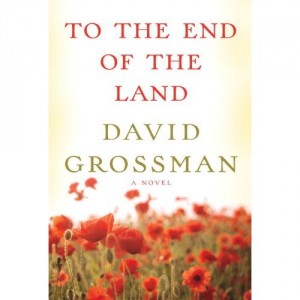
Now the whole whoredom of blurbing has been exposed.  The smoking debate in the blogosphere this weekend swirls around Nicole Krauss, who penned these unfortunate words on Israeli author David Grossman‘s forthcoming To the End of the Land:

Very rarely, a few times in a lifetime, you open a book and when you close it again nothing can ever be the same. Walls have been pulled down, barriers broken, a dimension of feeling, of existence itself, has opened in you that was not there before. To the End of the Land is a book of this magnitude. David Grossman may be the most gifted writer I’ve ever read; gifted not just because of his imagination, his energy, his originality, but because he has access to the unutterable, because he can look inside a person and discover the unique essence of her humanity. For twenty-six years he has been writing novels about what it means to defend this essence, this unique light, against a world designed to extinguish it. To the End of the Land is his most powerful, shattering, and unflinching story of this defense. To read it is to have yourself taken apart, undone, touched at the place of your own essence; it is to be turned back, as if after a long absence, into a human being.

Conversational Reading asked, “what the hell is up with this blurb, which is plastered right on the galley’s front cover in a largish font,” adding, “I think I can live without having Grossman’s book touch me at the place of my own essence. For that, I listen to Michael Jackson.”

Krauss: center of a controversy

A commenter noticed that his advanced reading copy had an abbreviated version of the over-the-top blurb — apparently the publisher had second thoughts.

Laura Miller at Salon denounces “praise inflation” here, and describes the unhappy servitude of authors who get asked to blurb their colleagues.  One commenter posted: “One phenomenon Miller does not discuss is blurbismo, where the blurb writer essentially draws attention to himself with an unwontedly chest-thumping blurb.  There was a rash of this back in the late eighties if I recall; Fran Lebowitz was a particular offender.”

Book Ninja got in on the act.  MobyLives deplored Krauss’s “sophomoric gushing.”

But for the best reaction, you can’t top The Guardian, which has launched a contest for the most absurd blurb for Dan Brown’s Da Vinci Code.  If it “touched you in the place of your own essence, you really need to tell the world about it.”

One gem:

“The DaVinci Code didn’t make me miss my train, it made me step in front of it, so engrossed was I by its intricate spell. When the doctors pieced me back together, they explained that I would need extensive reconstructive surgery before I’d stop scaring kids. I told them I wanted my new body to be modelled on the description of Robert Langdon and bless them, they complied.”

And another:

“I buried a copy of this book in my father’s coffin and he rose from the dead. Her tears of ecstatic joy when I read it aloud to her washed away my grandmother’s cataracts. My chronic eczema disappeared once I’d finished the first chapter.”

Sandy-haired, polo-neck shirted novelist book writer author scribe Mr Brown is a god placed upon this earth and I having started a church in his name in recognition of the words he has graced us with.

Full disclosure: I’ve been strangely gratified when my when my reviews have been blurbed on the backs of books (cf. here and here and here) — though I never actually pandered to the blurbosphere by writing the perfect, laudatory sound bite that will find it’s way to the bookjacket.  Maybe I’m not trying hard enough.

And a true confession:  I’ve never read Grossman, though long ago I added this quote from him in my electronic commonplace book:

“No such thing as a silly story exists. … Every story is connected, somewhere, in the depths, to some greater meaning. Even if it is not revealed to us.”

***

UPDATE:  Discussion continues at The Independent over  here, and also a what-we-meant-to-say post at Conversational Reading here.  But there’s more conversation on my Facebook page.  My reply:

There’s one piece missing from this puzzle: Assuming, as The Independent does, that this is a case of author naivete (an unconvincing argument, since even new writers know enough to avoid New Age blather), where was Knopf/Random House in all of this?

Where was the wise, staying hand in Knopf/Random House publicity to say “no”? This wasn’t just a lapse in Ms. Krauss’s good taste (in her expression of her appreciation, obviously, not in the appreciation itself) — it was also a serious lapse in judgment from a major publishing house. The publicity department didn’t merely excerpt it and use her stuff — they ran it on the cover of advanced reading copies in large type, presumably to sway the reviewers on the receiving end of these galleys.

I, too, have been blurbed by publishers from my reviews in major daily papers — but that’s an important difference. My credentials were vetted, possible conflicts of interest discussed, and final reviews were sifted by more than one editor.

That would seem to be one answer: use more newspaper reviews for blurbs. That doesn’t nix the problem altogether, but it reduces the chance of collegial backscratching, and guarantees more jaundiced eyes will catch purple prose.

Two problems, of course: 1) Newspaper book sections are an endangered species; 2) Timing; it would be hard to get newspaper reviews in time for the publishers to put them on the jacket.

Meanwhile, anybody have one of these advanced reading copies to spare?  I’d love to read the Grossman’s book.

“A Pearl Harbor of the mind”

July 8th, 2010
Share

Flanked by poets Helen Pinkerton (left) and Turner Cassity (right) at a 2008 reading

On the 26th, it will have been a year since poet Turner Cassity died — and he never did, as he had promised, take me for a night on the town (let alone to the San Francisco opera) during one of his frequent swings through the Bay Area.

It’s too bad.  I have a feeling it would have been a night to be remembered.  As friend and fellow poet Suzanne Doyle writes, “Frankly, he was the best date I ever had.”  She reminisces on the Ablemuse site here.  An excerpt:

Whenever we planned a night on the town, Turner would tempt me with, “Come on, Suzanne, let’s be wicked together.” A good part of being “wicked” included gin and the effervescent tonic of gossip.

On the particular night in question she recalls (but only patchily) how the gay librarian from Georgia began the festivities with a “French 77”:

By the book, the French 77 consists of a shot of elderberry liqueur and lemon juice in a flute, with the flute then filled with champagne. But the way the bartender made this drink for Turner, whom he had surely served before, was to present him with what I remember as being a beaker of champagne and a shot of cognac. Turner sank the shot in the champers. I have a clear memory of the shot slowly rocking its way to the bottom, like the depth-charge it surely was. If I’d even tasted that drink, I’m sure the rest of the evening would be a complete blank. Turner had two.

Turner himself called the evening “a Pearl Harbor of the mind.”

I wrote about him two years ago here, but my small effort is easily dwarfed by the Ablemuse tribute Suzanne has organized.  “Laying It on the Line for Turner Cassity” is difficult to navigate, but has some real gems (and this video) among its 133 pages.  Among the notable rubies is this tribute from A.E. Stallings:

Lines For Turner Cassity

Librarian with military bearing,
You’ve left us poems critics call unsparing,

A wit not merely clever but hard-bitten.
Sometimes I hear you utter, “overwritten,”

And even at this distance, there’s no choice
But hear the word in that distinctive voice,

Not circumflexing drawl, dipthonged legato,
But southern, brisk particular staccato—

Inimitable voice—for never cruel—
Impatient only of the pompous fool

And vagueness that gesticulates at truth.
Clear and styptic as a dry vermouth,

You taught the courtesy of kindness meant
By shaming false and floral sentiment.

Death’s crude arithmetic only exacts
The estimate of flesh and bone for tax;

You it has taken—and yet misconstrued—
For it has left us your exactitude.

I didn’t meet Turner face-to-face till 2008, at the Terrace Room reading pictured above.  Despite his talk of wickedness, he seemed gentle and affable — his sociability masking a charming bashfulness.

On my desk, I have the two last Cassity volumes — Devils and Islands and The Destructive Element: New and Collected Poems.  But Suzanne promises that there’s more to come — he left caches of material left behind.  “A whole gigabyte,” Suzanne told me, in the parlance of our times.  “That’s a lot of text files.”

Okay. I’m bragging.

July 8th, 2010
Share

OK.  I’m bragging.  But my big bro, Richard Hill, is featured in the 40th issue of the Smithsonian Magazine this month, in an article called “Asteroid Hunters”:

Most of us do what we can for the environment, but Rik Hill’s actual job is to protect the planet. “Whoa, look at that!” he says, pointing at a moving blip of light on a computer screen. “It’s an unknown object. We just discovered one.”

My brother spots “near earth objects” via telescope and computer perched atop Mount Lemmon, a 9,000-foot peak north of Tucson, Arizona.  (And the author of the article, Robert Irion, at UC-Santa Cruz, provides some of the intern writers who pen the science stories at the Stanford News Service.)

I am chuffed to have a brother who is an outer space gladiator (I was about to write “rock star,” but under the circumstances…)  Said one reader I know:  “Very cool article I like how they made him sound like a super hero.”

His response:  “Like I told one group of people that sent kudos….[my wife] Dolores still has me clean the cat boxes.”  (Dolores Hill is a space scientist at the University of Arizona.)

Meanwhile, happy anniversary Smithsonian Magazine, which has been publishing “very cool” articles for four decades!  Sample quote from the interview with Miami satirist and author, “Carl Hiaasen on Human Weirdness“:  “When I go out and give speeches, the title of my speech is ‘The Case Against Intelligent Design.’ And I base it strictly on what I’ve observed here in Florida, which is that the human race is actually de-evolving, that we are moving backward on the evolutionary scale.”


<<< Previous Series of PostssepNext Series of Posts >>>
